
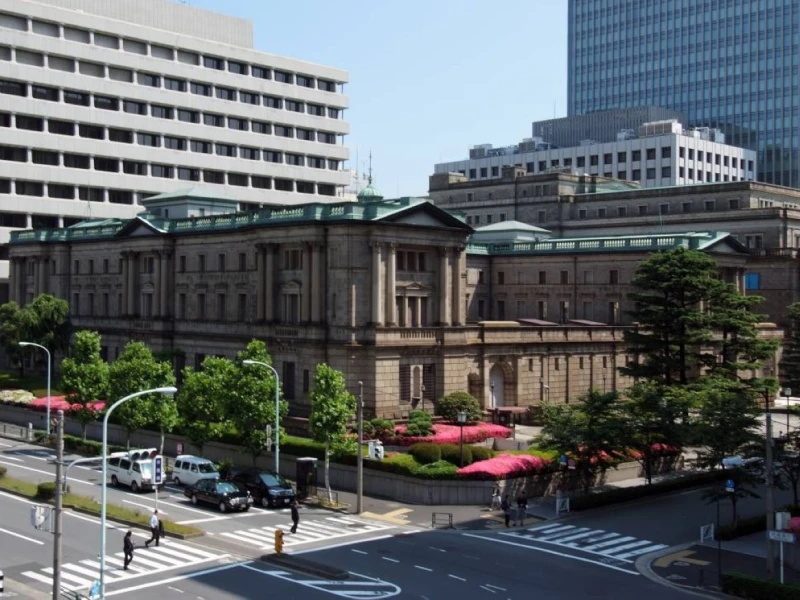
The Bank of Japan said Friday inflation had hit its two percent target, more than 13 years after it adopted the goal in a bid to pull the economy out of deflation, but held off hiking interest rates for now.
Successive governments struggled for decades to pull the country out of a spiral of deflation -- sustained falls in prices that are harmful for economic growth -- and the two percent goal was set in 2013 as the BoJ launched massive monetary easing measures.
While core consumer inflation intermittently topped the level in the early 2020s, Friday marked the first time that the central bank confirmed the long-term price trend had been achieved.
"Underlying CPI (consumer price index) inflation is at a level that is generally consistent with the price stability target of two percent, and is expected to remain at around that level," the central bank said on its website.
The BoJ also said in a statement that it had kept its key interest rate unchanged at 1.25 percent after an eight-to-one majority vote.
That decision came after the US Federal Reserve and the European Central Bank held their policy rates earlier in the week.
However Japanese officials are expected to hike in December as inflationary pressure builds.
Japan has faced sustained consumer price increases since spring 2022, and the BoJ began tightening rates in March 2024 after 10 years of ultra-loose monetary policy.
Core inflation in September stood at 2.1 percent, sharply up from 1.7 percent in August, according to data released by the government last week.
The BoJ warned Friday that the year-on-year rate of increase in CPI excluding fresh food "is likely to accelerate to a level clearly above two percent".
It said this was because of various factors including a rise in oil costs that "is expected to push up prices, mainly of energy and goods", and the rise in the price of semiconductors, reflecting the increase in global AI-related demand.
The depreciation of the yen is also a factor, it added.
Marcel Thieliant of Capital Economics said "further tightening looks very likely and we expect the policy rate to reach 2% by the middle of next year".
"If anything, the risks are tilted towards further tightening thereafter," he added.