
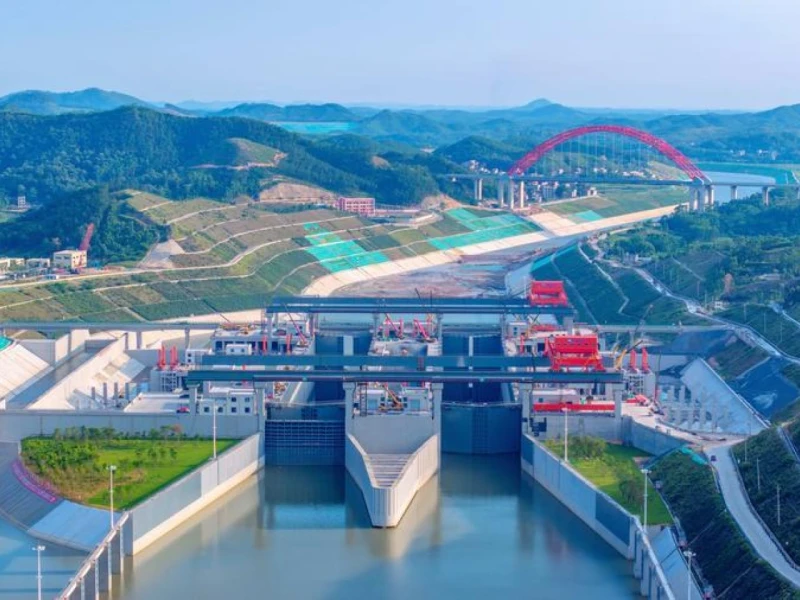
China opened a major canal on Wednesday that will provide landlocked areas with direct access to the sea, state media said, reducing transport times and costs as the country aims to bolster trade ties with regional neighbours.
The 134-kilometre (83-mile) Pinglu Canal took four years to build and links Nanning, in the southern manufacturing region of Guangxi, to the Gulf of Tonkin, flanked by China and Vietnam.
Goods from southwestern China previously had to be transported to the southern metropolis of Guangzhou in order to reach the sea, but the new canal will cut the journey by more than 560 kilometres, state news agency Xinhua said.
The canal will also reduce transport costs by 18 to 30 percent, and generate annual savings of more than five billion yuan ($745 million) in the sector, it added.
State broadcaster CCTV broadcast footage of the first barge to pass through the canal and aerial video of ships navigating its calm waters, describing the waterway as "the project of our century".
The canal "opens up the shortest, most economical and most convenient route" to Southeast Asia and will boost economic development, Xinhua said.
The new route is particularly important to rural parts of Sichuan, Chongqing and Yunnan, among others, which are less well-connected than more prosperous regions in eastern China.
Coal, ore, cereals, chemicals, agricultural produce and other materials will now be able to reach foreign markets more easily.
The bulk of the canal's construction work involved widening, deepening and modifying existing waterways, while a small section had to be excavated, Xinhua said.
The project, which began in August 2022, cost a total of 72.7 billion yuan, it added.