
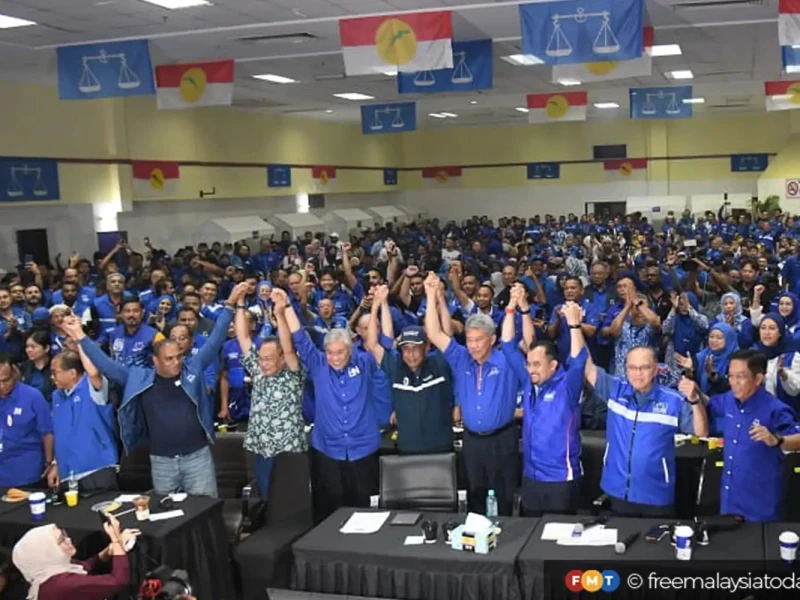
Barisan Nasional (BN) has emerged as the biggest winner from the Negeri Sembilan state election, strengthening its political position while the results have raised fresh questions over the appeal of Prime Minister Anwar Ibrahim’s Pakatan Harapan (PH) and the future of Bersatu within the opposition Perikatan Nasional (PN).
The election, held on Saturday, saw BN and PN secure a combined 25 of the 36 seats in the state assembly, giving them a comfortable majority and dealing a significant blow to PH, which had governed the state in alliance with BN before the polls.
BN’s performance marks a notable political recovery for the coalition, which had suffered a major setback in the 2018 general election. The result also boosts the standing of its key leaders and reinforces the party’s claim to remain a major force in Malaysian politics.
For PH, however, the outcome is a setback. The coalition had won 17 seats in the 2023 state election, while BN secured 14 and PN five. The latest result indicates a significant shift in the state’s political balance.
The outcome is also likely to intensify scrutiny of Anwar’s political strategy and the performance of the federal unity government, particularly after PH suffered another setback in the Johor state election.
Bersatu, meanwhile, faces its own challenges within PN. The party’s position in the opposition coalition could come under greater pressure as PAS seeks to consolidate its influence and PN reassesses its strategy following the election.
The Negeri Sembilan result therefore carries implications beyond the state, offering an early indication of shifting voter preferences and the evolving balance among Malaysia’s major political coalitions.
For BN, the election represents a comeback. For PH, it is a warning that its electoral appeal cannot be taken for granted. And for PN and Bersatu, the result could trigger a fresh debate over leadership, strategy and the coalition’s future direction.
The election thus leaves Malaysia’s political landscape more competitive, with the fortunes of the three major blocs likely to remain closely watched ahead of the next national contest.