
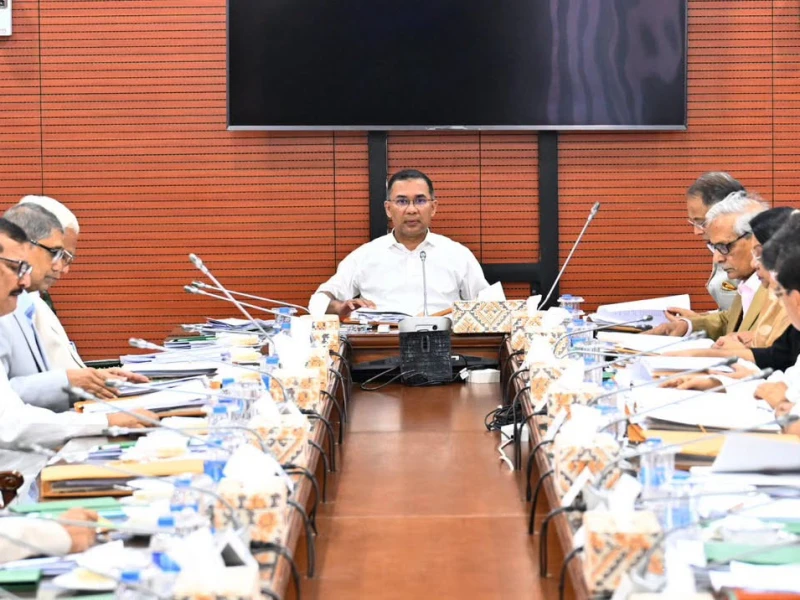
The Cabinet on Monday gave final approval to the drafts of the Special Solar Power Installation Act, 2026 and the Public Procurement (Second Amendment) Act, 2026, along with the proposed list of government holidays for 2027.
The approvals were given at the 26th Cabinet meeting held at the Bangladesh Secretariat, with the relevant ministries and divisions placing the proposals before the meeting.
The Cabinet gave final approval to the draft Special Solar Power Installation Act, 2026, subject to vetting by the Legislative and Parliamentary Affairs Division.
The draft law has been prepared to turn the Special Solar Power Installation Ordinance, 2026, already promulgated to ensure the rapid expansion of special solar power installation activities, into an Act through Parliament.
Under Article 93(2) of the Constitution, an ordinance promulgated under Article 93(1) must be placed before Parliament at its first sitting following its promulgation.
The Cabinet also approved the draft government holiday list for 2027.
Under the proposed list, there will be 15 days of general holidays marking national days and important religious festivals of different communities. Four of these days will coincide with weekly holidays – two Fridays and two Saturdays.
A further 14 days of public holidays will be observed through executive orders on the occasion of the Bengali New Year and important religious festivals. Three of these days will coincide with weekly holidays – one Friday and two Saturdays.
The proposed list also provides for up to three days of optional leave annually for government employees to observe religious festivals.
In addition, employees belonging to different small ethnic communities working in the Chittagong Hill Tracts and elsewhere in the country will be entitled to two days of optional leave to celebrate their principal social festival, Boisabi, or similar festivals.
Thus, the proposed total of 29 general and executive-order holidays will amount to 22 effective holidays, excluding seven days that fall on weekly holidays – three Fridays and four Saturdays.
The Cabinet also gave final approval, subject to vetting by the Legislative and Parliamentary Affairs Division, to the draft Public Procurement (Second Amendment) Act, 2026.
The draft legislation seeks to incorporate provisions aimed at protecting domestic industries, promoting greater competition in public procurement and reserving special arrangements for new, micro and small enterprises, women tenderers and disadvantaged tenderers.
It also proposes modernising procedures under the open tendering method, expanding the use of the limited tendering method to ensure equitable distribution of resources, clarifying provisions relating to professional misconduct and introducing alternative procurement arrangements for urgent state requirements.
The Public Procurement Act, 2006, which provides the principal legal framework for government procurement, has so far been amended six times. The latest amendment was made through the promulgation of the Public Procurement (Amendment) Ordinance, 2026, on September 21 this year.
In accordance with Article 93(2) of the Constitution, the ordinance must be placed before the next session of Parliament in the form of a bill to convert it into law.
The draft Public Procurement (Second Amendment) Act, 2026, has also been published on the websites of the Bangladesh Public Procurement Authority (BPPA) and the Implementation Monitoring and Evaluation Division (IMED) to invite public opinion.
 Prev Post :