
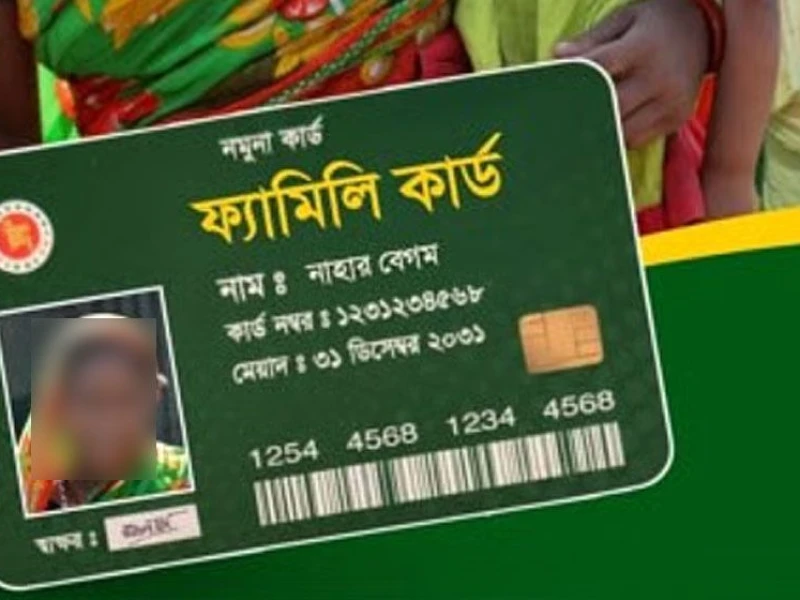
The government is set to roll out a new “Family Card” scheme ahead of Eid-ul-Fitr, targeting poor and vulnerable groups in selected regions across the country.
Under the proposed programme, around 5 million families will receive a monthly allowance of Tk 2,000 each. The initiative may require an estimated Tk 12,072 crore in budgetary allocation.
Officials say integrating data from existing social safety net programmes could help prevent duplication and ensure significant savings in public expenditure.
The scheme aims to provide direct financial support to low-income and at-risk households. By coordinating with beneficiaries of ongoing welfare programmes, the government plans to reduce the risk of overlapping benefits.
Who Will Get the Family Card
Priority will be given to:
1. The poorest rural households and low-income individuals
2. Landless agricultural labourers and day labourers
3. Income-insecure or work-incapable individuals and families
4. Female-headed households, including widows and abandoned women
5. Families with unmarried girls aged between 15 and 18
6. Returnee migrants, particularly women migrants, and their families
7. Families with children or members with disabilities, including autism and other special needs
In addition, low-income families holding Trading Corporation of Bangladesh (TCB) cards, as well as beneficiaries of other social safety programmes, may be integrated into the new system.
Who Will Not Qualify
1. More than one member from the same household will not be enlisted separately
2. Those already receiving benefits under other social safety net schemes, unless integrated into the new framework, will not be eligible
3. Individuals identified as duplicate beneficiaries in government records will be excluded
4. Verification and Implementation
According to the plan, beneficiary data will be verified through the Single Registry System using National ID (NID) information, date of birth, mobile number and union details.
The programme will initially be piloted in eight upazilas. Following policy approval, budget allocation and payroll preparation, authorities aim to begin disbursing funds without delay.
 (6)-1771761446.webp) Prev Post :
Prev Post :