
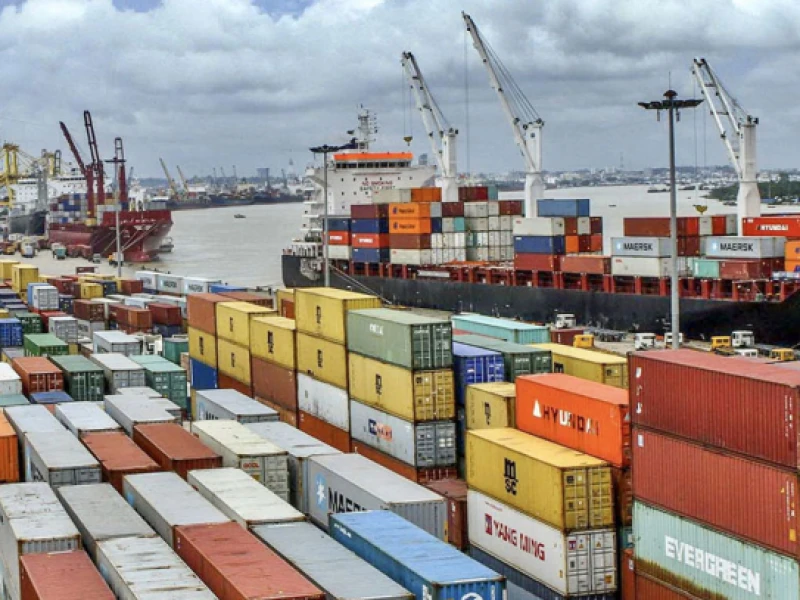
Operations at Chattogram Port were severely disrupted on Saturday as workers and employees observed an eight-hour work stoppage demanding the cancellation of the government’s decision to lease the New Mooring Container Terminal (NCT) to foreign operator DP World.
The work stoppage, observed from 8:00am to 4:00pm, brought cargo handling activities at several jetties to a near standstill, port sources said.
The programme was led by leaders of the Chattogram Port unit of Jatiyatabadi Sramik Dal and former port CBA leaders. Protesters announced that administrative and operational activities would again remain suspended for eight hours on Sunday.
According to port officials, loading, unloading and transportation activities were halted as operators of container and cargo handling equipment refrained from work. At the port’s oldest General Cargo Berth (GCB) terminal, cargo handling from three vessels berthed at three jetties remained completely suspended.
President of the Berth Operators, Ship Handling Operators and Terminal Operators Owners’ Association, Fazle Ekram Chowdhury, said operations could not continue as jetty workers employed under private operators did not join work. He added that operators of port-owned equipment also stayed away from duties at the GCB.
The number of cargo-laden and container-carrying vehicles entering the port in the morning was also significantly lower than on a normal day. In view of the situation, additional security measures were put in place around the port’s administrative buildings.
Meanwhile, the Chattogram Port Authority (CPA) on Friday evening issued a statement warning of strict legal action against any individual or group involved in disrupting normal operations at the country’s principal seaport.
The statement said that a vested quarter, under the pretext of protesting the government’s decision on NCT and a High Court verdict, was attempting to create disorder through unlawful meetings, rallies, processions and work stoppages.
The ongoing stalemate at the port has raised growing concerns among stakeholders over its potential impact on the country’s import-export activities.
 Prev Post :