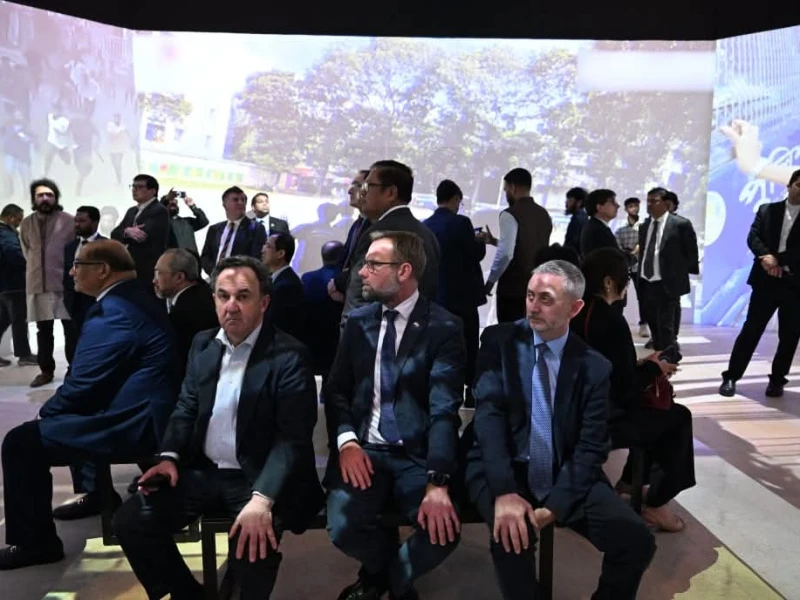
Foreign diplomats stationed in Dhaka on Tuesday visited the July Mass Uprising Memorial Museum, days ahead of its scheduled opening to the public.
Cultural Affairs Adviser Mostofa Sarwar Farooki briefed the visiting diplomats and guided them through the museum’s key sections. At the outset of the two-hour visit, the delegation observed a minute of silence in memory of nearly 4,000 people who were martyred during the fascist regime of Sheikh Hasina.
Farooki said the July Museum would seek collaboration with similar institutions worldwide. “The idea behind the museum is to prevent the recurrence of such misrule—not only in Bangladesh, but anywhere in the world,” he said.
Foreign Adviser M Touhid Hossain, who was also present, said the museum reflects the people’s long struggle against authoritarian rule. “While the museum captures the climax of the 36 days of the July uprising, it also documents years of misrule that led to it,” he said, adding that the core lesson of history is to ensure such events are not repeated.
Chief Curator of the July Museum Tanzim Wahab explained the museum’s features and narratives to the diplomats and guests.
European Union Ambassador and Head of Delegation to Bangladesh Michael Miller said the visit was both inspiring and sobering. “The July Museum is a powerful reminder of the importance of understanding history, how mass uprisings occur, and the genesis of the 2024 mass uprising in Bangladesh,” he said.
A large number of distinguished members of the diplomatic corps attended the visit, including ambassadors and senior representatives from Algeria, Argentina, Bhutan, Denmark, Egypt, France, Iran, Iraq, Italy, Kosovo, Libya, Morocco, Nepal, Norway, Pakistan, Palestine, Russia, Singapore, Spain, Türkiye, the United States, China, Japan and Brunei Darussalam.
Representatives of international and regional organisations were also present, including the Aga Khan Development Network (AKDN), Asian Development Bank (ADB), BIMSTEC, CIRDAP, FAO, IFDC, IOM, UNHCR, World Food Programme (WFP) and UNOPS.
Senior Secretary for SDG Affairs Lamiya Morshed, Foreign Secretary Asad Alam Siam and Cultural Affairs Secretary Md Mofidur Rahman were among the senior government officials present.
Ganabhaban, the former official residence of ousted autocrat Sheikh Hasina, has been transformed into the July Mass Uprising Memorial Museum, which is set for a soft opening next week.
 Prev Post :