
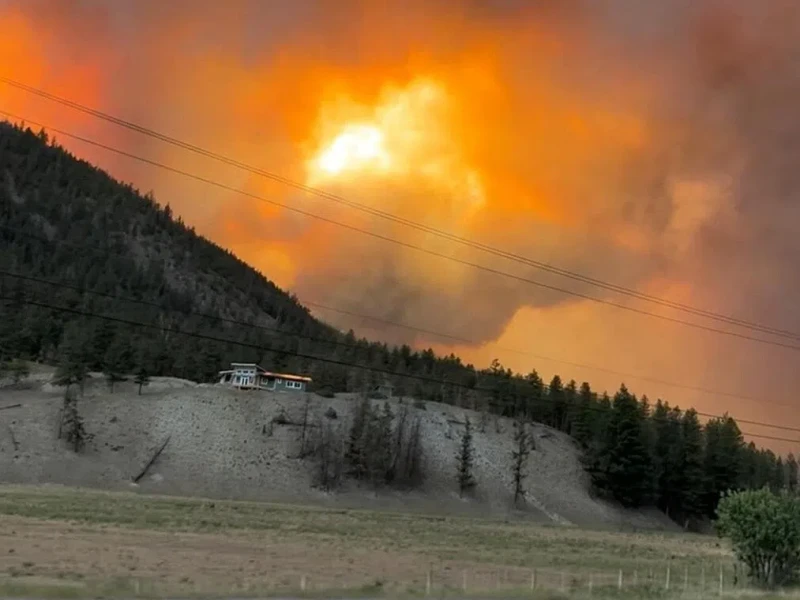
Human-caused climate change made the extreme fire conditions behind this year's Canadian wildfires twice as likely to happen, a study said Thursday.
Although the season began with below-normal activity, prolonged hot and dry weather since July has driven the rapid spread of fires across the country, with Ontario and the Northwest Territories especially impacted.
More than 3.8 million hectares (9.4 million acres) have burned so far this year, displacing thousands of people and exposing millions to dangerous smoke levels.
To assess the role of climate change, researchers at the World Weather Attribution group used observations and climate models to compare conditions to what the world would have looked like without climate change warming the planet by 1.4C since pre-industrial times.
Focusing on the 7-day and the 30-day periods of most extreme "fire weather" in Ontario and the Northwest Territories, they found human-induced climate change made the events about twice as likely.
"Based only on observations, fire weather as seen in this year's event is no longer rare in today's climate, expected to occur once every 2-6 years in the Northwest Territories, and every 6-15 years in Ontario," the WWA said.
In a world without climate change, it would have occurred around every 40 years.
"Since 2023, the wildfires we've seen across Canada have been fundamentally different in their scale and intensity," said lead author Theodore Keeping of Imperial College London.
"The geographic spread of these fires is scary and shows that despite preparedness from wildfire governance, adaptation alone is not enough," he added.
"We need to rapidly move away from fossil fuels to avoid events like this becoming even more of a reality."
Human-caused climate change is increasingly creating conditions for more frequent and intense wildfires, through increased heat, extended drought, and a "thirsty" atmosphere that enhances the drying of organic matter.
It is a vicious loop, with increased wildfires releasing massive amounts of carbon dioxide into the atmosphere, accelerating planetary warming.
 Prev Post :