
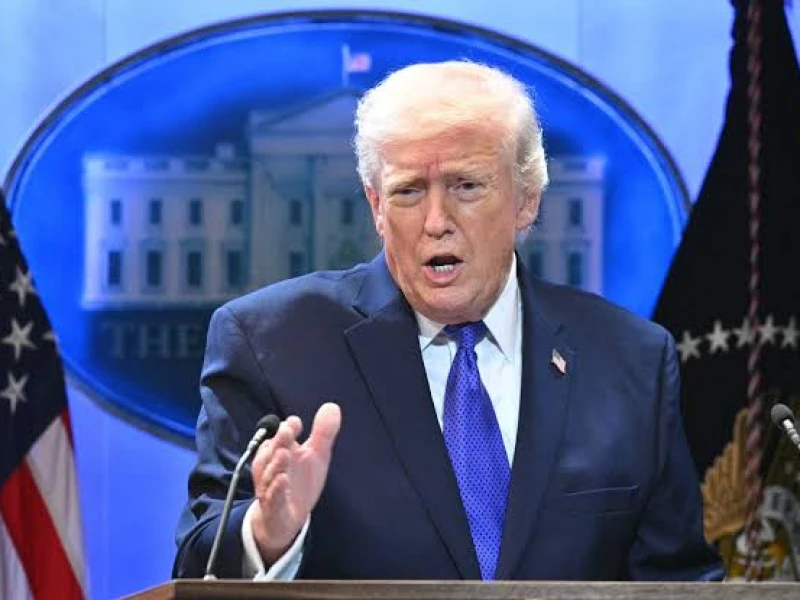
U.S. President Donald Trump announced a fresh increase in tariffs on imports from all countries on Saturday, raising the global rate to 15 per cent less than a day after the U.S. Supreme Court struck down key elements of his previous trade policy as unconstitutional.
The court last Friday ruled 6-3 that Trump exceeded his authority when he imposed widespread tariffs using emergency economic powers without Congressional approval, reinforcing the constitutional principle that only lawmakers can authorise taxation — including tariffs.
In a social media post, Trump said he would immediately raise the weltweite tariff from an earlier announced 10 per cent to 15 per cent, invoking a seldom-used provision of U.S. trade law that allows temporary levies for up to 150 days without legislative consent. He framed the hike as a continuation of his effort to protect American industries and counter what he described as decades of unfair trade practices.
Administration officials said the higher tariff will apply universally to imports from countries worldwide, though exemptions are expected for selected products such as critical minerals, pharmaceuticals, and goods from Canada and Mexico under existing trade agreements.
Trump sharply criticised the Supreme Court decision, accusing justices — including some he had appointed — of undermining national interests and calling the ruling “anti-American.” His combative stance underscores longstanding tensions over executive power in shaping U.S. economic policy.
The legal setback has placed Trump’s aggressive trade strategy under fresh scrutiny both domestically and internationally. Trade analysts warn higher tariffs risk triggering retaliation, pushing up costs for U.S. consumers and businesses and potentially slowing economic growth. European leaders have also expressed concern about escalating trade uncertainty following the court’s decision.
The 15 per cent tariff — the maximum permitted under the statute Trump cited — marks a compromise between the president’s aims and constitutional limits, but its long-term sustainability may hinge on forthcoming actions by the U.S. Congress and further judicial review.
 Prev Post :