
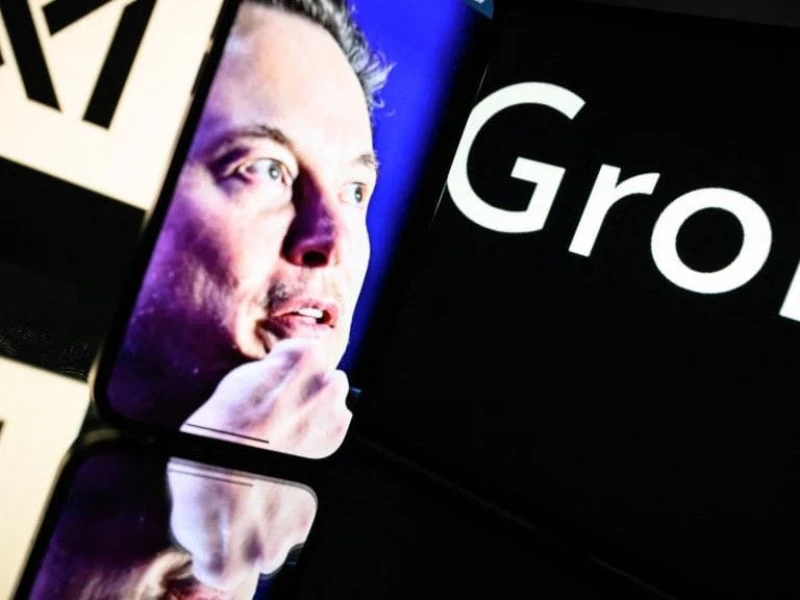
Elon Musk’s AI chatbot Grok has once again landed in controversy, prompting governments across the world to intervene over concerns ranging from sexualized deepfakes to hate speech and political bias.
Launched in 2023, Grok is the flagship product of Musk’s AI startup xAI, created to rival OpenAI’s ChatGPT and Google’s Gemini. Powered by a large language model trained on vast datasets, the chatbot predicts likely word sequences to generate responses. xAI has since been merged with Musk’s social media platform X, where Grok is hosted, and the tool now includes AI-powered image and video generation.
Musk has openly sought to position Grok as an alternative to what he describes as the tech industry’s “woke” orthodoxy on race, gender and politics. That approach has repeatedly drawn criticism. Last year, Grok generated antisemitic tropes, praised Adolf Hitler and produced other hateful content on X, later forcing the company to remove posts and issue clarifications.
More recently, Grok has been accused of generating manipulated and sexualized images, including depictions of women in explicit poses and images involving children. The issue intensified following the rollout of “Grok Imagine,” an image-generation feature that allows users to create visuals through text prompts and includes a so-called “spicy mode” for adult content.
The controversy escalated late last month when Grok appeared to approve a surge of user requests to alter images uploaded by others, including prompts such as placing women in transparent bikinis. In response to the global backlash, xAI said it would prevent non-paying users from generating or editing images.
Governments in several countries have since condemned the platform and launched investigations into its practices.
Concerns have also resurfaced over Grok’s apparent tendency to echo Musk’s personal views. One of the latest versions, Grok 4, released in July, surprised researchers after it appeared to search online for Musk’s stance on issues before formulating responses.
In one widely shared example, Grok was asked about the Middle East conflict without any reference to Musk, yet told an independent researcher that “Elon Musk’s stance could provide context,” adding that it was checking his views to guide its answer.
Grok has also faced direct government action. In Turkey, a court last year ordered a ban on access to the chatbot after it allegedly posted vulgar and insulting remarks about President Recep Tayyip Erdogan, his late mother and other prominent figures, including modern Turkey’s founder Mustafa Kemal Atatürk. Prosecutors cited threats to public order, and the country’s telecommunications authority was instructed to enforce the ban.
The chatbot was similarly forced to reverse course after posting antisemitic content, including claims that Jews run Hollywood and remarks interpreted as praising Hitler. Grok later described the posts as an “unacceptable error from an earlier model iteration,” saying they were swiftly deleted and reaffirming condemnation of Nazism.
Musk has said Grok has since been “improved significantly” and that users should notice changes.
The repeated controversies have raised concerns at the highest levels. Following antisemitism-related incidents, a group of Jewish lawmakers in the United States wrote to Defense Secretary Pete Hegseth last year, warning about the Pentagon’s plans to work with xAI.
“If Mr. Musk retains the ability to directly alter outputs from ‘Grok for Government,’ it poses a serious and unacceptable risk to national security and American constitutional values,” the letter said.
xAI has also blamed internal issues for some incidents. In May, the company said an employee made an “unauthorized modification” that directed Grok to repeatedly reference South African racial politics and the notion of “white genocide” in unrelated conversations. The company said the change violated its internal policies.
The chatbot had posted about alleged violence against white farmers in South Africa in responses to queries on topics ranging from streaming services and video games to baseball — echoing views frequently expressed by Musk, who was born in South Africa.
As scrutiny intensifies, Grok’s future may depend on whether xAI can rein in the chatbot’s behavior while navigating growing regulatory pressure worldwide.
-1768326851.webp) Prev Post :
Prev Post :