
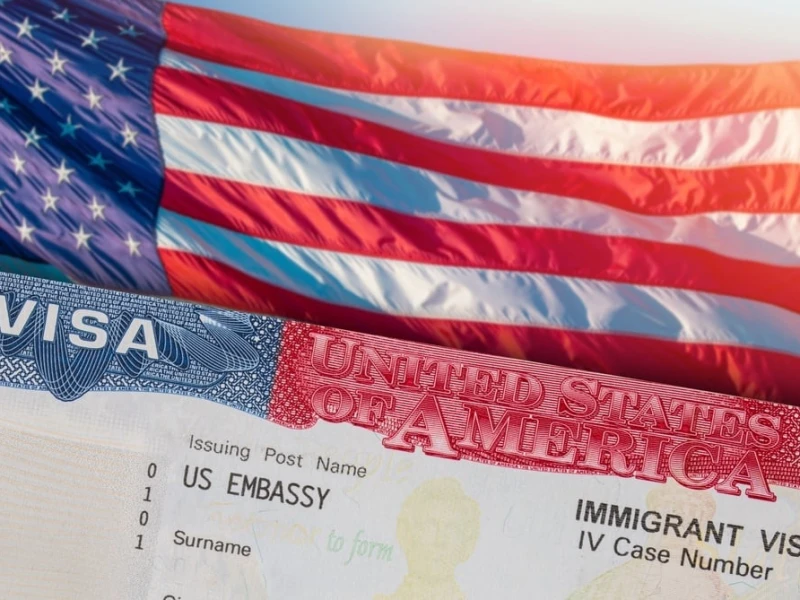
Since President Donald Trump returned to the White House last year, the United States has revoked more than 100,000 visas, reflecting the administration’s continued hardline stance on immigration.
The US State Department revealed on Monday that the cancellations included around 8,000 student visas and 2,500 visas for specialised workers. Most revocations, the department said, were linked to “encounters with US law enforcement for criminal activity,” though it did not clarify whether charges had been formally filed.
The sheer scale of the revocations highlights the breadth of Trump’s immigration crackdown since his re-election in 2024. Last month, the administration reported overseeing more than 2.5 million voluntary departures and deportations, describing the effort as a “record-breaking achievement.” However, some deportations reportedly involved individuals holding valid visas, raising concerns over due process and human rights.
Visa approval procedures have also been tightened, with more rigorous social media checks and expanded screening processes introduced. “We will continue to deport these thugs to keep America safe,” the State Department stated in a post on X.
Deputy spokesperson Tommy Pigott told reporters that the main reasons for revocations were overstays, driving under the influence, assault, and theft. He added that the number of revoked visas represents a 150 per cent increase compared with 2024.
A new Continuous Vetting Center has been established to ensure “all foreign nationals on American soil comply with our laws – and that the visas of those who pose a threat to American citizens are swiftly revoked,” Pigott explained. The centre is part of a broader effort to restrict entry, with US diplomats instructed to scrutinise applicants who may be hostile to the US or politically active.
In November, the State Department reported that around 80,000 non-immigrant visas had already been revoked since Trump’s inauguration, citing offences such as driving under the influence, assault, and theft.
Trump, sworn in for a second term on 20 January 2025, had campaigned on delivering the “largest deportation programme of criminals in the history of America.” Critics, however, argue that the crackdown has affected both criminals and non-criminals, with visa-holders holding opposing political views facing scrutiny.
In March, for instance, the administration began revoking visas from students involved in pro-Palestinian activism. Among them was Rumeysa Ozturk of Tufts University, reportedly targeted for writing an editorial in her campus newspaper. In October, visas were revoked for six foreign nationals who had “celebrated” the assassination of conservative activist Charlie Kirk online.
“The United States has no obligation to host foreigners who wish death on Americans,” the State Department stated on social media.
These measures have prompted concerns about potential violations of the First Amendment right to free speech. Public outrage has also intensified over the use of force in immigration enforcement. In a recent high-profile case, Renee Nicole Good, a 37-year-old mother of three, was shot dead in her car in Minneapolis during heightened immigration operations, sparking nationwide protests.
Source: Agencies
 Prev Post :
-1768326851.webp)