
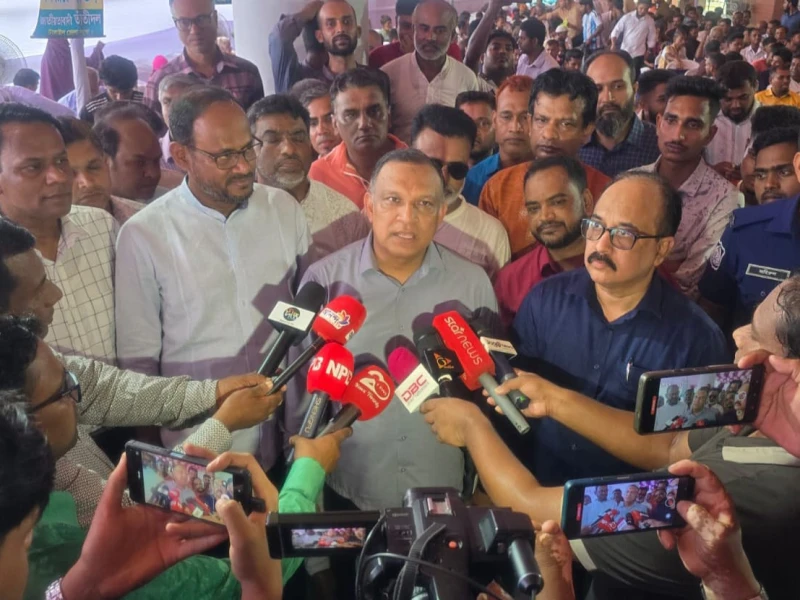
The government has already started work to modernise Bangladesh's handloom industry, develop skilled manpower, create new entrepreneurs and expand domestic and international markets for handloom products, said State Minister for Textiles and Jute Shariful Alam on Saturday.
"Tangail's saree is a symbol of Bangladesh's heritage, pride and emotion. To sustain the handloom industry of Tangail, modernisation is needed in product design, quality, branding and marketing, alongside preservation of tradition," the state minister said while addressing a programme after inaugurating a Handloom Training Centre and Basic Centre in Tangail.
He said the newly built training centre and basic centre is not merely a building or infrastructure but an important institution for producing skilled weavers, artisans and entrepreneurs. Weavers will receive hands-on training there in modern technology, changing fashion trends, new designs, product quality, market analysis and digital marketing.
Trainees will not be left with just certificates after completing the training, Shariful said, adding that initiatives will be taken to create internship and employment opportunities for them in textile, ready-made garment, knitwear and spinning mills and related industries based on their skills. "Promising entrepreneurs will also be given financial and technical support to help them become self-reliant."
The state minister said initiatives are being taken to revive traditional handloom products from different regions of the country, including the Tangail saree, under the concept of "One Village, One Product: Bringing Back Lost Heritage."
He stressed building weavers' skills in using digital platforms and e-commerce to showcase Jamdani, Tangail sarees, Benarasi, silk and other traditional handloom products in the international market. "Initiatives are being taken to display export-oriented handloom, textile, jute and GI products at international airports and Bangladesh missions abroad."
Shariful said the problems faced in using land ports for exporting handloom products would be resolved through discussions with the relevant ministries and departments.
"Effective measures will be taken to ensure that the benefits of importing dye, yarn and other raw materials go directly to genuine weavers instead of middlemen. The government will take necessary steps to ensure weavers' social and economic security, easy loans, training, employment and market linkage," he said.
Referring to the initiative to reopen Tangail's long-closed cotton mill, the state minister said the mill was once one of the region's key centres of employment and economic activity. "Local and foreign investors have already visited the mill, and efforts are underway to restart it quickly through private investment to restore employment and economic vitality for local residents."
 Prev Post :