The University Grants Commission (UGC) has taken an initiative to establish modern language centres at 25 public and private universities across the country to enhance the competitive capacity of Bangladeshi students in the global job market, internationalise higher education, and create an attractive academic environment for foreign students.
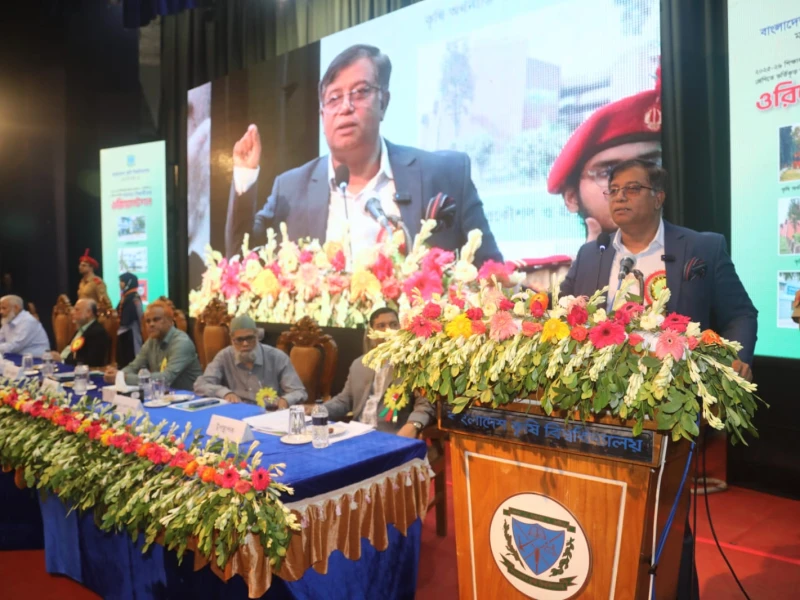
"These language centres at the 25 universities will teach a total of eight international languages, including Japanese, Korean, Chinese, Arabic, French and German," UGC Chairman Professor Mamun Ahmed said while addressing an exchange meeting with foreign students studying at Bangladesh Agricultural University (BAU) on Thursday.
The meeting was organised to encourage the enrolment of international students at universities in the country, review their academic experiences, and identify existing problems along with ways to address them. Foreign students studying at BAU took part in the programme.
The UGC chairman said the current government has adopted a plan to include a third language in the curriculum with a view to enhancing international communication skills within the education system.
This, he said, would create massive demand for skilled foreign language teachers from the primary to higher education levels. "The university-based language centres would meet that demand while equipping students with proficiency in internationally sought-after languages, thereby creating new employment opportunities both at home and abroad."
He further said that in the era of the fourth industrial revolution, artificial intelligence, global trade and international cooperation, multilingual proficiency is no longer an added qualification but an essential capability.
Language education, he added, would further smooth the path for Bangladeshi youth to pursue international higher education, research, technology, diplomacy, entrepreneurship, and entry into the global job market.
Mamun said the UGC is formulating a five-year strategic plan aimed at transforming the country's higher education system and improving its international standards. "One of the key objectives of the plan is to establish Bangladesh as a regional education hub in South Asia, making it a preferred destination for foreign students, researchers and teachers."
He said an "International Desk" would be formed with coordination among the Ministry of Foreign Affairs, the Ministry of Home Affairs, the Ministry of Education and the UGC to simplify admission, visa, accommodation, healthcare and other administrative services for foreign students. "Simultaneously, five public and five private universities in the country would be developed as model education hubs, with expanded infrastructure and services to ensure international-standard accommodation, medical centres, student support services, counselling, career support, and a multicultural learning environment."
He added that the proposed language centres would not be limited to language education alone; they would also serve as effective platforms for cultural exchange, international cooperation, joint research, academic exchange, and the practice of global citizenship among local and foreign students.
These initiatives, the UGC chairman said, would open up new possibilities for Bangladeshi universities in international rankings, research collaboration, and attracting foreign students.
 Prev Post :