
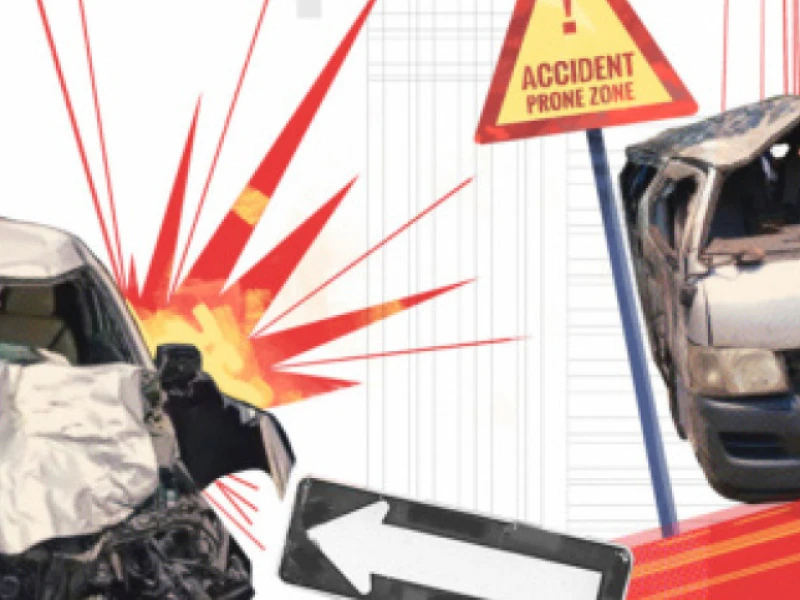
At least 274 people were killed and over 1,500 injured across the country during the 10-day Eid-ul-Fitr travel period, according to the Road Safety Foundation (RSF).
The casualties occurred in 342 road accidents between March 16 and 26, the RSF said.
In comparison, 249 people were killed and 553 injured in 257 accidents during last year’s Eid-ul-Fitr holidays, it added.
Among the incidents, the deadliest one occurred in Rajbari’s Daulatdia, where a bus plunged into the Padma river while waiting to board a ferry on Tuesday.
At least 26 bodies have been recovered, including 11 women, eight men, and seven children. Twenty-two bodies have been handed over to their families.
Another major accident took place on March 22 in Cumilla’s Jangalia Kochua area, when at least 12 people were killed after a mail train hit a Mamun Paribahan bus at a level crossing. Another 20 were injured.
RSF Executive Director Saidur Rahman said most accidents stem from poor management, lack of monitoring, and negligence in the transport sector.
For instance, he said, the Daulatdia tragedy reflects widespread mismanagement.
“Reckless driving, unfit vehicles, poor road management, and weak law enforcement are the main causes of road accidents in the country,” he told.
He also said clear policies on drivers’ working hours -- particularly for long-distance bus and truck drivers -- must be introduced and enforced.
The Bangladesh Passenger Welfare Association (BPWA), however, reported slightly different figures, saying at least 285 people were killed and 729 injured in 270 accidents between March 18 and 25.
Last year, 322 people died in 315 accidents during the same period, it said.
Talking to The Daily Star, BPWA General Secretary Mojammel Haque said probe reports into major accidents are rarely published, allowing similar incidents to recur every year.
“The causes are identified, but no effective steps are taken. The previous government ignored many of these incidents, allowing transport owners to act recklessly. We now see the current government also speaking on their behalf. As a result, the owners continue to act irresponsibly,” he added.
Meanwhile, Highway Police reported at least 90 deaths and 128 injuries in 142 accidents during the Eid period.
Accidents increase during Eid due to poor driver skills, weak road engineering, lack of coordination among agencies, and widespread violations of traffic rules, Additional IGP of Highway Police Delwar Hossain told.
“Many drivers forget they are responsible for 35 to 40 passengers,” he said, noting that speeding remains a major issue, with vehicles often exceeding the 80 kmph limit.
Referring to the Dhaka–Chattogram highway, he said there are 642 feeder roads along the route, allowing CNGs and auto-rickshaws to enter the highway illegally.
During the Eid season, traffic increases significantly on all roads and highways, and with only around 2,900 highway police personnel nationwide, managing the surge becomes even more difficult.
Motorcycles account for about 40 percent of accidents, largely due to high speeds, he added.
“Where there are no service roads, it becomes even harder to control such vehicles,” he said.
He stressed that better coordination and planning are essential, suggesting that police be involved in road projects from the beginning to address operational challenges.
“Police alone cannot solve the problem. Drivers, passengers, and all stakeholders must share responsibility,” he said.
 Prev Post :