
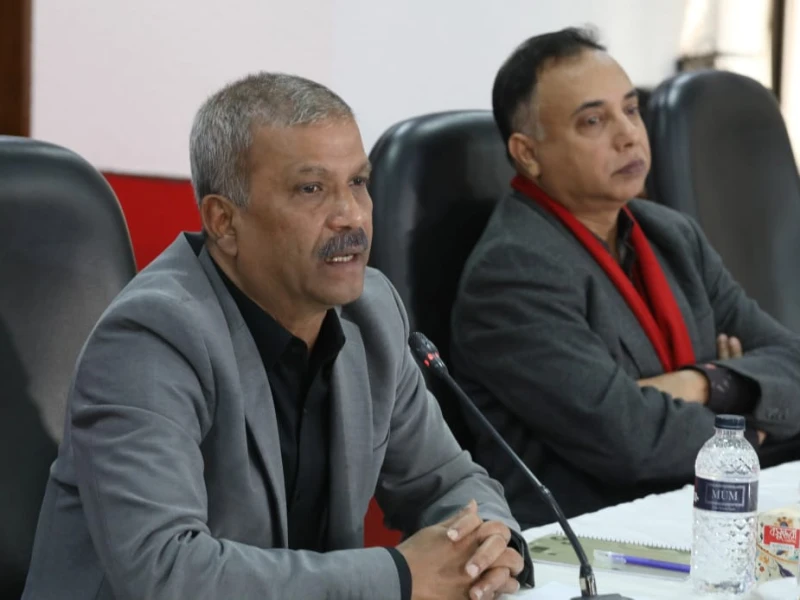
Law Adviser to the Interim Government Dr Asif Nazrul on Sunday said Bangladesh has never witnessed such a significant volume of reforms within such a short span of time, dismissing claims that no meaningful changes have been made.
“Questioning what reforms have been carried out has now become a trend. Some say no reforms have taken place. But in reality, such reforms have never occurred in Bangladesh’s history in such a short time,” he said.
Dr Asif Nazrul was speaking at a policy dialogue titled “Judicial Independence and the Rule of Law”, organised by the Centre for Governance Studies (CGS) at the CIRDAP auditorium in the capital.
He said six out of ten major recommendations of the reform commissions have already been retained, adding that judicial independence has largely been achieved in theory. “But independence without accountability will not bring success,” he cautioned, stressing strict adherence to judicial codes of conduct.
Asif Nazrul said all executive powers related to the judiciary have been transferred to the higher courts, legal aid has increased fivefold, and recent Supreme Court appointments were among the best so far. However, he warned that unless future elected governments show sincerity, sustainable rule of law will remain elusive.
The policy dialogue brought together political leaders, jurists, academics, lawyers and rights activists to discuss judicial independence, accountability, case backlog and public trust in the justice system.
CGS President Zillur Rahman, in his opening remarks, said discussions on judicial reform have reached an unprecedented level since the July uprising, but a wide gap remains between promises and implementation.
He pointed to growing public confusion over the proposed July Charter referendum, including its scope, process and citizens’ awareness. “Justice is the foundation of trust, but people are not receiving justice,” he said, adding that political interference and repeated legal changes for partisan interests have weakened judicial institutions.
Rahman cited the Reform Commission’s findings that nearly 4.3 million cases remain pending, stressing the need for systematic and effective measures to reduce the backlog while ensuring judicial accountability.
Chief Prosecutor of the International Crimes Tribunal Mohammad Tajul Islam said around 4.7 million cases are pending nationwide, warning that it could take 25 to 30 years to clear existing High Court cases at the current pace.
He emphasised increasing the number of judges, forming additional benches and introducing digital case management systems to speed up case disposal, while also calling for a change in mindset within the judiciary.
Former judge Ikhtedar Ahmed and several speakers raised concerns over politically influenced judicial appointments, inadequate numbers of judges and lack of institutional accountability, which they said undermine judicial independence.
Nilufar Chowdhury Moni, former BNP minister, said judicial appointments and security of judges remain unchanged, arguing that fear of political power still restricts judicial independence. “If fear is not eliminated, independence will remain on paper,” she said.
Speakers including Bajlur Rashid Firoz, Subrata Chowdhury, Ruhin Hossain Prince and Shamim Haider Patwary highlighted issues of impunity, mob justice, delayed trials and erosion of public confidence, warning that prolonged injustice fuels social instability.
Legal experts also stressed the need for transparent recruitment, adequate budget allocation, professional training, separation of powers and faster case resolution to restore public trust in the judiciary.
CGS Executive Director Parvez Karim Abbasi cited the World Justice Project’s Rule of Law Index 2025, noting that Bangladesh ranks 125th out of 143 countries, reflecting persistent institutional weaknesses despite marginal improvement.
The dialogue concluded with a consensus that judicial independence must be matched with accountability, political commitment and effective implementation to ensure justice, protect fundamental rights and strengthen democratic governance ahead of the next national election.
 (1)-1768714019.webp) Prev Post :
Prev Post :
 (2)-1768734052.webp)