
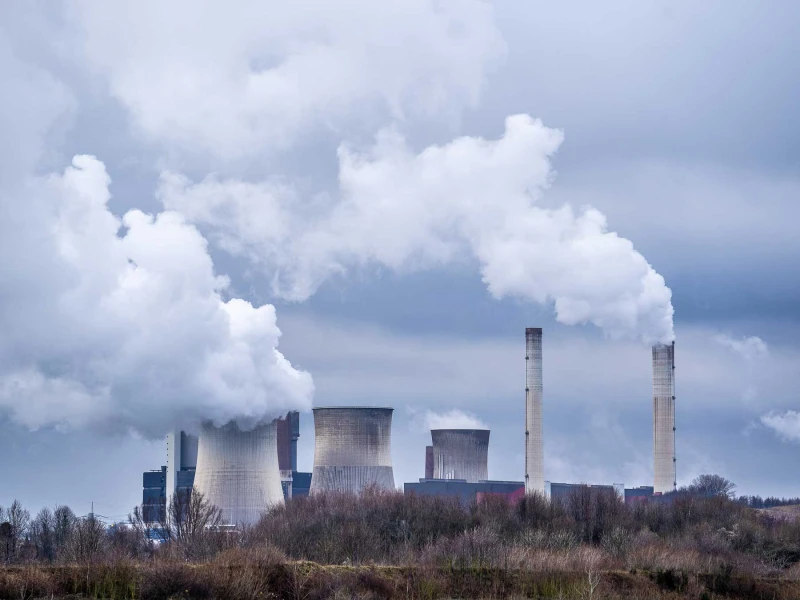
Dhaka woke up to another morning of hazardous air on Thursday, with winter fog trapping pollutants over the city and pushing air quality deeper into the ‘unhealthy’ category.
At 9:15 am, the overcrowded capital of Bangladesh ranked eighth among cities with the worst air quality in the world, recording an Air Quality Index (AQI) score of 163.
According to the AQI scale, such a reading signifies ‘unhealthy’ air, increasing health risks for the city’s millions of residents.
Globally, Afghanistan’s Kabul topped the list with an AQI score of 429, indicating extremely dangerous air conditions.
Indian cities Kolkata and Delhi followed in second and third positions with scores of 244 and 235, while Egypt’s Cairo ranked fourth with a reading of 179.
The AQI is used worldwide to communicate daily air quality levels and their potential health impacts. An AQI score between 50 and 100 is considered ‘moderate’, while readings from 101 to 150 are labelled ‘unhealthy for sensitive groups’. Levels between 150 and 200 fall into the ‘unhealthy’ category, 201 to 300 are deemed ‘very unhealthy’, and scores above 301 are classified as ‘hazardous’, posing serious health threats.
In Bangladesh, air quality is assessed based on five major pollutants — particulate matter (PM10 and PM2.5), nitrogen dioxide (NO2), carbon monoxide (CO), sulphur dioxide (SO2) and ozone. Elevated concentrations of these pollutants are particularly common during winter, when low temperatures and fog prevent their dispersion.
Dhaka has been struggling with chronic air pollution for years.
The situation typically deteriorates during the winter season and improves during the monsoon, when rainfall helps wash pollutants from the air.
The health implications are severe. According to the World Health Organization (WHO), air pollution is responsible for an estimated seven million deaths globally every year, primarily due to stroke, heart disease, chronic obstructive pulmonary disease, lung cancer and acute respiratory infections.
 Prev Post :