
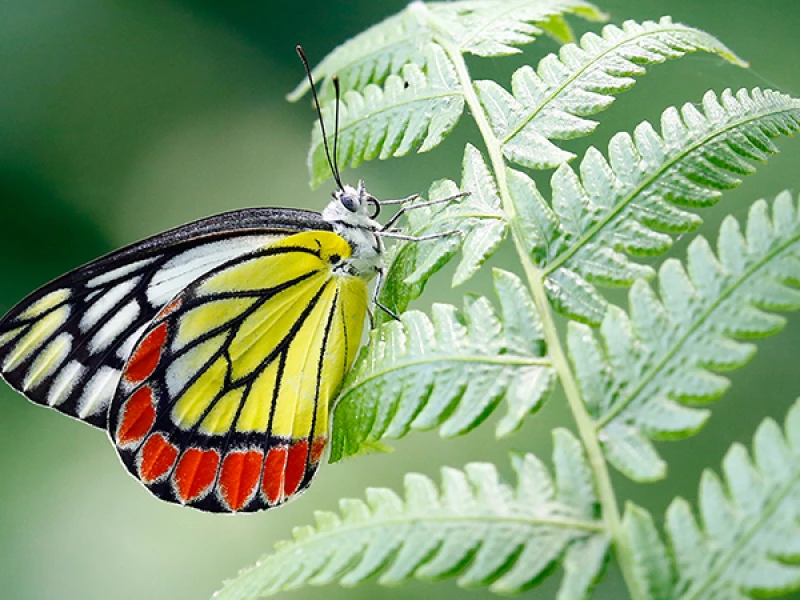
Recently, many residents have noticed an unusual increase in the number of butterflies on Dhaka’s streets. Experts and butterfly researchers are weighing in on the phenomenon, highlighting the crucial role butterflies play in nature and biodiversity, as well as the environmental implications. They also shed light on why and when butterflies migrate, and what actions we should take to protect them.
This article is written by Faisal Ahmed.
Color is one of nature’s most delicate measures of balance. The world is painted with shades we may never fully witness—hidden in flowers, birds, vines, mosses, and the smallest winged insects. Among these tiny bearers of silent beauty, the butterfly stands as one of nature’s gentlest messengers.
Since childhood, we have learned to marvel at their wings with the famous song—“Where did you find such colorful wings, dear butterfly?”—long before many of us ever saw one up close. Their fleeting flights from flower to flower, their brief pauses to sip nectar, and their sudden disappearances carry more than beauty. They whisper messages about the health of our environment. Each stroke of blue, yellow, or red on their wings silently reflects the state of our forests, green spaces, and climate.
But in the last two decades, relentless urbanization has drained Dhaka of much of its greenery. A recent study by urban planner Md. Anisur Rahman Tuhin warns that while nearly 40% of the population currently lives in cities, this number may rise to 60% within the next twenty years. Add climate migration from coastal regions to the mix, and the pressure on Dhaka’s green cover becomes even more severe. The small bushes, wild shrubs, and host plants that butterflies depend on for survival are disappearing.
And yet—something unexpected is happening. Recently, Dhaka residents say that they have reported a sudden increase in butterfly sightings across roads, rooftops, and parks. Some social media posts have been detected about the sudden appearance of butterflies on the street and air in Dhaka also. For a species with a life cycle of only about ten days as adults, such appearances often hint at something deeper: migration.
Professor Monowar Hossain Tuhin, butterfly researcher and writer at Jahangirnagar University, explains,
“Butterflies migrate when food becomes scarce. Adult butterflies depend on nectar, while caterpillars feed on the leaves of specific host plants. When those plants disappear, butterflies are forced to shift to new locations.”
According to him, the recent rise in butterflies suggests that Dhaka’s food sources—nectar plants and rooftop gardens—have increased. Botanical gardens, Ramna Park, Baldha Garden, and the growing trend of urban gardening have created small pockets of refuge. This should be taken into consideration of research and findings ahead.
But the story is not the same everywhere in the country.
Professor Tuhin warns that urban expansion and deforestation have already pushed nearly 20 to 25 butterfly species toward local extinction. Host plants like Akond, Jhumkolata, and Mimosa—critical for egg laying—are now increasingly rare.
“If we want butterflies to survive,” he says, “we must protect their habitats through natural restoration.”
Climate change adds another layer of complexity. Environmental scientists note that shifting seasons, heavier monsoon rains, and delayed winters can trigger unusual surges or declines in butterfly populations. Intense natural disasters disrupt breeding grounds, destroy young plants, and leave caterpillars without food. Professor Tuhin cautions,
“If policy-makers are not alert, butterflies could disappear from many parts of Bangladesh within the next decade.”
Studies by the International Union for Conservation of Nature (IUCN) reinforce these fears. Bangladesh is home to almost 300 butterfly species, yet over 188 are now classified as critically endangered, endangered, or vulnerable—victims of habitat destruction, pesticide use, and pollution.
Butterflies are not just ornaments of the natural world; they are subtle guardians of the ecosystem. Their presence indicates ecological stability, while their decline signals a deeper imbalance already unfolding around us.
As industrialization tightens its grip and concrete spreads across cities, environmentalists urge institutions and offices to expand green spaces. Rooftop gardens, pocket forests, and urban parks may soon become our last lifelines.
Because saving butterflies is not just about saving a species— It is about preserving the delicate balance of nature itself, and ultimately, the balance of our own lives. it is about protecting an entire web of life that quietly holds our world together. When butterflies disappear, it signals a rupture in nature’s harmony — a warning that the soil, the air, the flowers, and even our food systems are under threat.
 Prev Post :