
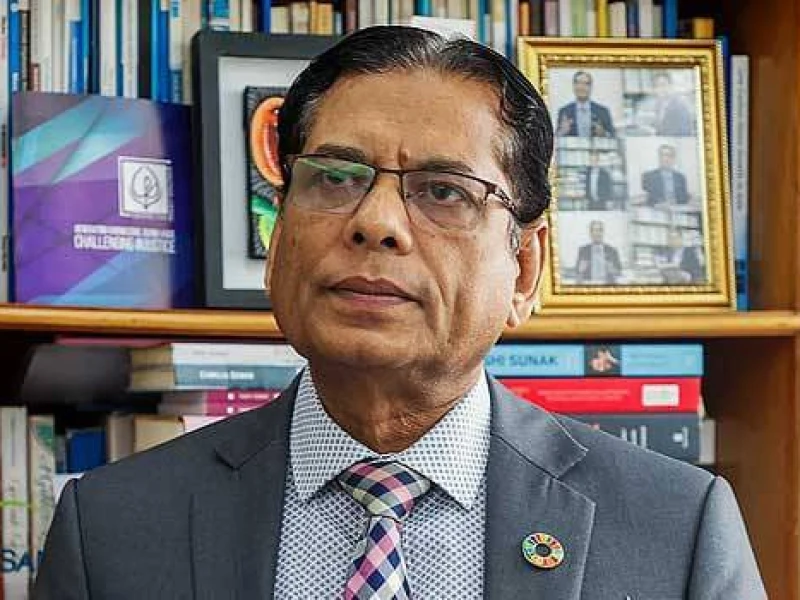
Unless irregularities in Bangladesh’s macroeconomic management are addressed, incidents similar to the large-scale looting of banks witnessed in the past could recur in the future, warned CPD Distinguished Fellow Mustafizur Rahman on Tuesday.
“The problems in the banking sector did not originate within the sector alone, and their solutions also do not depend solely on banking reforms. First and foremost, the macroeconomy must be put in order,” Mustafizur said while speaking at a seminar on the upcoming national budget and the banking sector organised by Unnayan Samannay at its Banglamotor office.
Mustafizur said every economy rests on a strong foundation, and in Bangladesh’s case that foundation is heavily dependent on the banking sector. Any major disruption in banking, he noted, would have far-reaching consequences for the entire economy.
“Due to the mountain of non-performing loans, interest rates have had to be increased, investment has slowed, and inflation has remained elevated. The burden of these problems has ultimately fallen on ordinary people,” he said.
Emphasising the importance of political economy, the economist said improvements in governance and political institutions would positively influence macroeconomic management, which in turn would help restore depositors’ confidence in the banking system. “Good politics leads to good economics. It is difficult to sustain good politics under a dysfunctional economic system, and the July uprising demonstrated that reality.”
Mustafizur also argued that stabilising the economy should take precedence over pursuing higher GDP growth at the moment. “The economy is currently facing a fire of destruction that must first be extinguished. Once stability is restored, attention can return to accelerating GDP growth.”
Referring to Bangladesh Bank’s proposed Tk 60,000-crore refinancing scheme aimed at reviving closed factories, he urged the central bank to exercise the highest level of caution in disbursing the funds. “If any portion of this money is misappropriated, the refinancing mechanism itself could come under serious strain. Those who have genuinely suffered should be the primary beneficiaries of such loans.”
Describing inflation control as one of the biggest challenges for the upcoming budget, Mustafizur said inflation would begin to ease once investment gains momentum. “Investment does not depend solely on lower interest rates. Greater emphasis should be placed on implementing the single-window service and removing bottlenecks at ports.”
The CPD economist also noted that the forthcoming budget envisages higher operating expenditures while much of the Annual Development Programme (ADP) remains debt-financed. “Bangladesh cannot rely only on a bank-based economy. The equity market, securities market and bond market must also be strengthened to diversify sources of financing.”
Highlighting Bangladesh’s growing integration with the global economy, Mustafizur stressed that international credit ratings and assessments could no longer be ignored. “If banks receive poor ratings, raising funds from abroad will become increasingly difficult, leaving the country with little option but to borrow at higher costs.”
Although Bangladesh has secured additional time before graduating from the Least Developed Country (LDC) category, Mustafizur said there is no room for complacency.
He said the country must begin preparing now for challenges associated with the loss of patent protections, duty-free market access and other graduation-related benefits, and that the upcoming budget should reflect those preparations.
 Prev Post :