Bangladesh has requested some African countries to export petroleum products as the country has been going through energy crisis amid war in the middle-east, sources said
The middle-east war leads to energy crisis globally as the USA and Israel launched the war on February 28, 2026 by attacking Iran in violation of the international law.
Bangladesh has nine missions in the African continent--Algiers (Algeria), Cairo (Egypt), Addis Ababa (Ethiopia), Addis Ababa (Ethiopia), Nairobi (Kenya) Tripoli, (Libya), Port Louis (Mauritius), Rabat (Morocco), Abuja (Nigeria), Abuja (Nigeria) and Pretoria (South Africa).
The Ministry of Foreign Affairs sent letters to Bangladesh mission in African countries to start negotiation on importing petroleum products early last month.
Bangladesh High Commissioner to Nigeria Miah Md Mainul Kabir held meetings with the Nigerian Minister of State for Petroleum Resources (Gas) Ekperikpe Ekpo last month at the latter’s office in Abuja and requested him to export petroleum products.
The Ministry of Foreign Affairs, Bangladesh Petroleum Corporation (BPC) and Bangladesh missions in Africa is planning to hold zoom-meeting with stakeholders concerns on importing petroleum products.
As of early 2026, Ekperikpe Ekpo serves as the Nigerian Minister of State for Petroleum Resources (Gas). Appointed by President Bola Tinubu, he oversees the development of the nation's gas sector, including initiatives like the Nigerian Gas Master Plan 2026 and key local content transformations within the industry.
Meanwhile, Bangladesh Ambassador to Algeria Md. Najmul Huda will hold meeting with stakeholders of Algeria on the importing petroleum products .
Ambassador of Bangladesh to Morocco Sadia Faizunnesa is also working to explore new avenues to import petroleum products
It is to be mentioned here that African countries never exported petroleum products to Bangladesh in the last 55 years.
Saudi Arabia, UAE, Qatar, Kuwait and Oman are major exporters of petroleum products to Bangladesh, according to sources in the Bangladesh Petroleum Corporation (BPC) under the primarily through government-to-government (G2G) deals.
The key fuel demand (FY2024-25): Diesel: 4.35 million tonnes (primary fuel, about 63% of demand), petrol: 662,000 tonnes and Octane: 415,000 tonnes (approx. 200,000+ tonnes imported).
Meanwhile, the government is also considering expanding the Eastern Refinery Limited (ERL) to reduce reliance on refined fuel imports.
Meanwhile, Minister for Power, Energy and Mineral Resources Iqbal Hassan Mahmood assured the nation that Bangladesh currently has no deficit of energy as the supply has increased this year compared to last year.
He also said that the government has taken comprehensive preparations to ensure uninterrupted energy supply in the country despite global uncertainty.
The minister clearly stated that there is no fuel shortage in Bangladesh at present and supply has actually increased compared to last year.
Making a statement under rules 300 of the Rules of Procedure in the House, he said the issue of fuel and energy is directly linked to national economic stability, industrial production, agriculture, transportation and the overall livelihood of the people, and therefore it is necessary to present the real situation before the country.
Iqbal urged the country’s people to cooperate with the government by avoiding unnecessary fuel purchases, preventing illegal hoarding, reducing energy wastage and reporting illegal storage or smuggling activities.
The minister said the world is going through a volatile period due to international conflicts, geopolitical tensions, supply chain risks and uncertainty in fuel transportation, particularly in the Middle East, which has put pressure on global energy supply systems.
The impact of this situation has also reached Bangladesh, but under the directive of Prime Minister Tarique Rahman, the government has taken timely and effective preparations to keep the energy supply normal.
He informed the House that when the government assumed office on February 17, 2026, diesel stock stood at 206,000 metric tons, and as of March 30, 2026, diesel stock increased to 218,000 metric tons.
He said last year’s daily diesel demand in March was around 12,000 metric tons, while petrol and octane demand ranged between 1,200 and 1,400 metric tons respectively. But this year, abnormal increases in fuel purchases have been observed in many areas, indicating hoarding tendencies rather than real demand growth.
The minister also said that fuel import arrangements have already been made to ensure supply continuity. In April, 50,000 metric tons of fuel (octane) will be imported under existing agreements, while an additional 30,000 metric tons will be sourced locally to meet demand for the coming months.
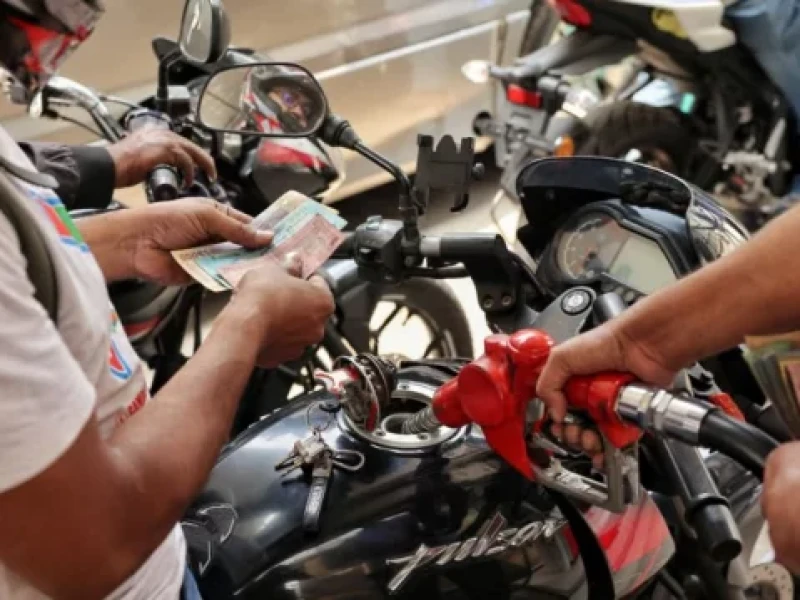
Currently, diesel is being sold at around Tk 100 per litre while the actual cost has risen significantly due to global price increases. Similarly, octane and petrol are being sold below international market rates, with the government bearing substantial subsidy to protect consumers.
“The government believes that in times of global crisis, the first responsibility of the state is to stand beside the people and ensure their protection,” he added.
Iqbal noted that many countries have declared energy emergencies and restricted industrial and educational activities due to fuel shortages, but Bangladesh has kept transportation, industries, agriculture, education and business activities running smoothly.
He urged all to cooperate with the government by avoiding unnecessary fuel purchases, preventing hoarding, reducing energy wastage and reporting illegal storage or smuggling activities.
“Fuel and energy security is a collective responsibility. If we remain united and disciplined, no global crisis can weaken Bangladesh,” he said.
Meanwhile, State Minister for Power, Energy and Mineral Resources Aninda Islam Amit said that the government has been able to ensure the country’s energy store to demand until next April.
“The government is now aiming to build a reserve sufficient for 90 days, and work in this regard has already begun. The world will continue to operate under varying degrees of crisis from now on, and we must adapt to this new reality,” he said.
Amit made these remarks while speaking as the chief guest at a programme held in Jashore for distributing one-time cheques among the poor and underprivileged from Bangladesh National Social Welfare Council.
He said although 80 countries around the world have increased fuel prices so far, the Bangladesh government has no plan to raise fuel prices at this moment.
The state minister said any increase in fuel prices would lead to higher electricity tariffs, increased public transport costs, and rising prices of food items, making life more difficult.
The economy is already under pressure due to the COVID-19 pandemic and the Russia-Ukraine war, he said, adding any further rise in prices would make the situation unbearable.
In March last year, the average daily demand for diesel was 12,000 tonnes, while petrol-octane demand ranged between 1,200 and 1,400 tonnes.
He said Bangladesh is among the five countries whose vessels have been permitted by Iran to pass through the Strait of Hormuz, describing it as a diplomatic success of the current government.
“In the interests of Bangladesh and its people, we are trying to reach every part of the world where it is necessary,” he said.
 Prev Post :