
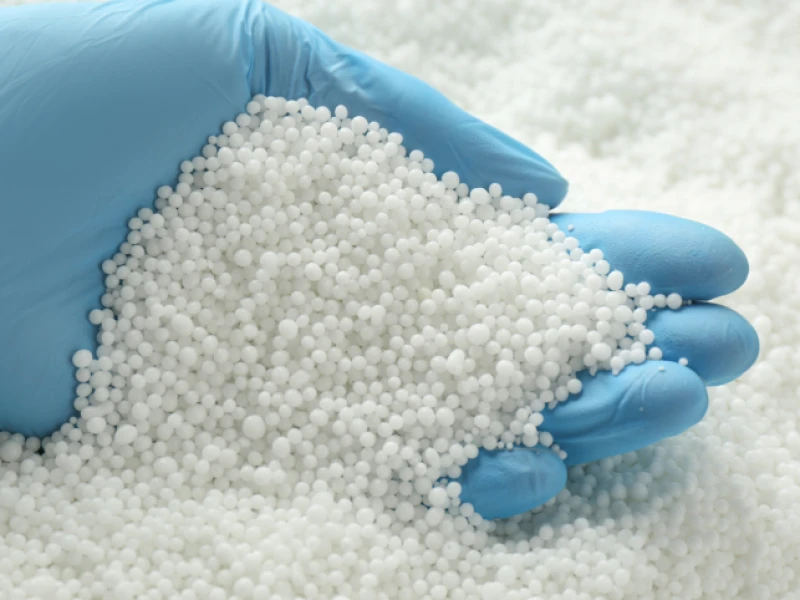
The government is making urgent efforts to secure fertiliser, especially urea, from both regular and alternative sources to ensure food security and prevent any supply shortage after June amid the US-Israel war on Iran.
Amid instability caused by the war, serious doubts have arisen over whether the 17 listed suppliers can deliver fertiliser through the Strait of Hormuz. In response, the Bangladesh Chemical Industries Corporation (BCIC) opened an international tender, inviting global suppliers to secure this vital agricultural input.
Contacted by The Daily Star, BCIC Chairman Md Fazlur Rahman said the urea tender was widened for international participation to address the ongoing emergency situation caused by global disruptions in fuel and gas supply, which have led to domestic factory shutdowns.
He said that while there is no supply shortage until June, the country requires a reserve of around 600,000 tonnes of urea for the July-September period, which cannot be met through local production due to gas shortages.
We are seeking imports from multiple sources, including Saudi Arabia and the United Arab Emirates, while exploring options with Russia despite sanctions-related complications, as well as alternatives such as Brunei, Malaysia, and Vietnam. Meanwhile, in the current situation, China has stopped exporting fertiliser.”
A senior official of the agriculture ministry said the government is also working to explore whether US sanctions on Russia could be eased to allow fertiliser imports from that country.
He added that a letter was sent to Iran through the foreign ministry on March 29 to ensure safe transit of shipments from the Middle East, which pass through the Strait of Hormuz.
The same day, a meeting at the industry ministry decided to issue a tender for the import of an additional 200,000 tonnes of urea fertiliser.
Rahman expressed optimism that the Ghorashal Polash Fertilizer PLC will resume operations shortly, while Karnaphuli Fertilizer Company Limited and Shahjalal Fertilizer Company Limited are expected to resume operations by May.
A senior official of the agriculture ministry said the government is also working to explore whether US sanctions on Russia could be eased to allow fertiliser imports from that country.
He added that a letter was sent to Iran through the foreign ministry on March 29 to ensure safe transit of shipments from the Middle East, which pass through the Strait of Hormuz.
The same day, a meeting at the industry ministry decided to issue a tender for the import of an additional 200,000 tonnes of urea fertiliser.
Rahman expressed optimism that the Ghorashal Polash Fertilizer PLC will resume operations shortly, while Karnaphuli Fertilizer Company Limited and Shahjalal Fertilizer Company Limited are expected to resume operations by May.
Currently, the country has urea stock until June this year, while non-urea fertiliser stock will last until October, said Ahmed Faisal Imam, additional secretary for fertiliser management and monitoring branch at the agriculture ministry.
Bangladesh requires over 26 lakh tonnes of urea annually, of which around 10 lakh tonnes are produced domestically. The rest have to be imported from Saudi Arabia, the United Arab Emirates, and Qatar, all of which ship fertiliser, gas, and oil through the Strait of Hormuz.
Aman rice, which is grown in a season beginning after June, accounts for 40 percent of the total annual rice crop, estimated at around 4 crore tonnes in the 2024-25 fiscal year.
Azajul Haque, research officer of fertiliser management and monitoring at the Ministry of Agriculture, said Bangladesh imports non-urea fertilisers from Russia, Canada, Morocco, China, Tunisia, Jordan, and Egypt.
Urea is mainly imported from Saudi Arabia and Qatar, he told the reporter.
He stated that current fertiliser stocks stand at 373,100 tonnes of urea, 381,200 tonnes of TSP, 538,500 tonnes of DAP, and 318,200 tonnes of MOP.
Regarding import routes, he said the Hormuz route is used most frequently, particularly for imports from Middle Eastern countries, while shipments from Russia, Canada, and China do not face such issues.
According to a recent CNBC report, analysts said they had seen the cost of FOB (Free On Board) granular urea in Egypt -- a bellwether of nitrogen fertilisers -- jump to around $700 per metric ton, up from $400 to $490 before the war began.
The peak season for fertiliser demand is November to March, mainly for Boro rice cultivation, when Bangladesh uses 60 percent of the fertiliser used in crop production.
Apart from urea, the government also plans to sign a contract with Egypt to import Diammonium Phosphate and Triple Super Phosphate fertilisers.
 Prev Post :