
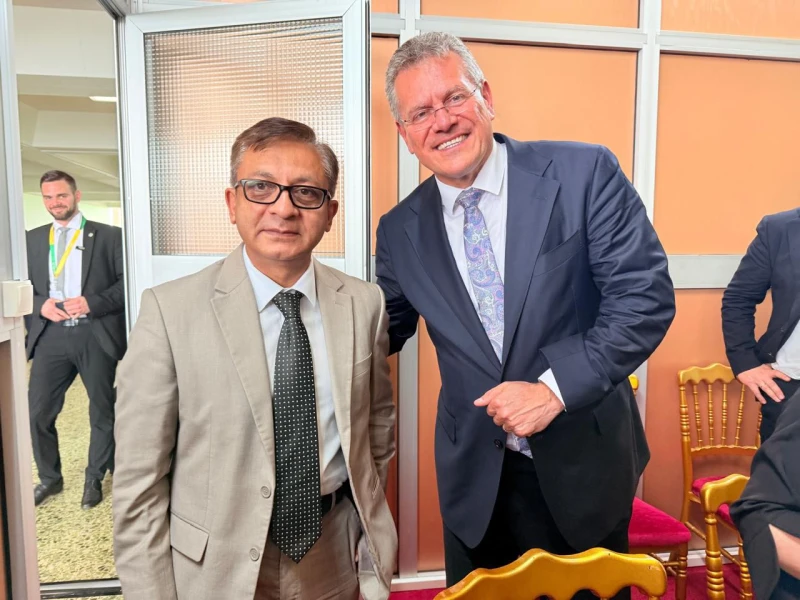
Bangladesh and the European Union (EU) have expressed optimism about strengthening bilateral trade and investment cooperation following a meeting held on the sidelines of the World Trade Organization’s 14th Ministerial Conference (MC14).
Commerce Minister Khandakar Abdul Muktadir led the Bangladesh delegation on Sunday, accompanied by Commerce Secretary Mahbubur Rahman and other senior officials.
The EU side was led by Commissioner Maroš Šefčovič, along with Director-General for Trade Sabine Weyand and other senior representatives.
During the meeting, the commerce minister reaffirmed Bangladesh’s strong commitment to deepening economic partnership with the EU, said the new government is taking forward-looking steps to enhance Bangladesh’s integration into global value chains and improve the business climate, which would accelerate sustainable, trade-led growth.
Highlighting Bangladesh’s upcoming graduation from the Least Developed Country (LDC) status, the minister requested the EU to extend the preparatory transition period by three years.
Muktadir said such support would help Bangladesh maintain export competitiveness and mitigate potential economic risks.
He also urged the EU to initiate discussions on a Free Trade Agreement (FTA) at the earliest, noting that the EU remains Bangladesh’s prime export destination, particularly for ready-made garments.
The minister further mentioned that Bangladesh has already concluded an Economic Partnership Agreement (EPA) with Japan and is currently engaged in negotiations on FTAs and Comprehensive Economic Partnership Agreements (CEPAs) with countries including South Korea, Singapore and the United Arab Emirates.
Referring to labour sector reforms, Muktadir said Bangladesh has made significant progress in line with the International Labour Organization (ILO) guidelines and that an amended labour law will be enacted soon.
The EU side assured that Bangladesh’s request for extending the LDC transition period would be considered positively and appreciated the ongoing labour reforms.
Regarding the proposed FTA, the EU noted that the matter would be evaluated after completing necessary internal procedures.
Both sides emphasised the importance of ensuring a level playing field, transparency and fairness in trade and investment.
The EU highlighted the need for balanced engagement, while Bangladesh reiterated its commitment to ensuring non-discriminatory and equitable treatment for all partners.
The meeting concluded with both sides agreeing to maintain close engagement and continue discussions on trade, investment and reform initiatives in the future.
 Prev Post :