
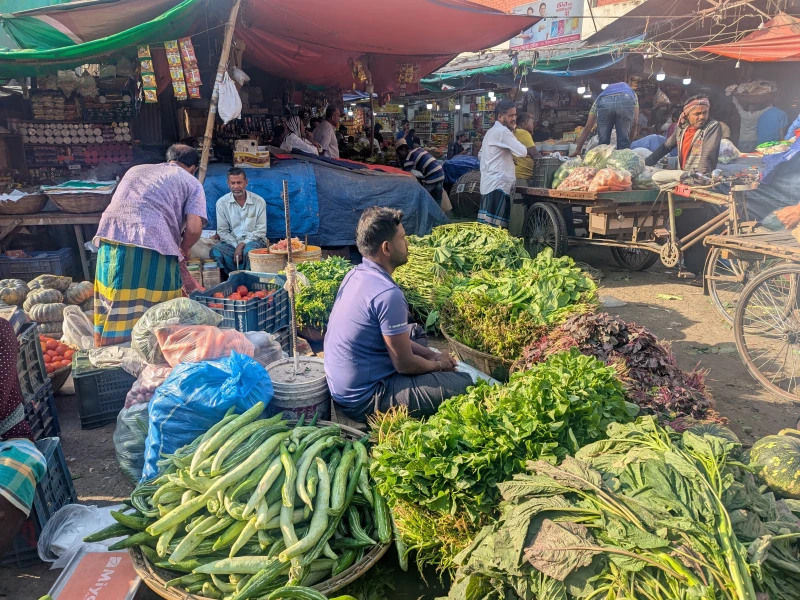
Prices of key essentials including chicken, chickpeas and fruits have surged in Dhaka’s kitchen markets just days before the start of Ramadan, adding pressure on consumers.
A visit to several wholesale and retail markets in the capital on Wednesday found that prices of chickpeas, lentils, poultry and fruits have increased sharply over the past week, with traders blaming a sudden spike in demand while consumers alleged syndication.
At Karwan Bazar wholesale market, good quality chickpeas were selling at Tk 90-100 per kg. The same item was retailing at Tk 110-115 per kg in Shantinagar, Rampura and Badda, up from Tk 80-85 a week ago.
Prices of lentils also climbed. Anchor daal, which was selling at Tk 50 per kg earlier, is now priced at Tk 80. Coarse lentils used for preparing popular Ramadan snacks like onion fritters (piyaju) rose to Tk 120 per kg from Tk 90-100.
Chickpea traders said supply remains adequate but prices increased due to higher demand ahead of Ramadan.
Poultry prices witnessed a steep rise within days. Broiler chicken was selling at Tk 200-220 per kg, up from Tk 190-200 two days ago and Tk 160-170 a week earlier. Sonali chicken was retailing at Tk 340-360 per kg, compared to Tk 320-340 two days ago and Tk 280-300 last week.
“Wholesale prices of chicken increased from Tuesday evening, forcing us to adjust retail rates,” said Latif, a poultry trader in North Badda.
Local (deshi) chicken prices also rose by Tk 50-60 per kg to Tk 700-720 from Tk 650.
Beef prices increased to Tk 800 per kg in markets where it was previously sold at Tk 750. Mutton was selling at Tk 1,000-1,200 per kg depending on the market.
Consumers expressed frustration over the price spiral.
“Like every Ramadan, prices of almost all items have been raised before the fasting month begins. We have to spend an extra Tk 2,000-3,000 for monthly groceries,” said Afsana Akter at Rampura market.
Another buyer, Ehsanur Rahman, alleged manipulation. “If there were supply shortages, prices would have increased weeks ago. The sudden hike just before Ramadan indicates syndication.”
In the fruit market, prices of most fruits increased except dates, which dropped by Tk 50-100 per kg depending on variety.
Malta rose to Tk 300-350 per kg from Tk 250-260. Apples climbed to Tk 350-380 from Tk 280-320. Jujube increased to Tk 200-250 from Tk 120-180, while pomegranate prices jumped to Tk 520-580 per kg from Tk 450-480. Pineapple prices rose to Tk 80-100 per piece from Tk 60.
Fruit trader Suman in Motijheel alleged that a syndicate at the Badamtoli wholesale market influences prices every Ramadan.
Sirajul Islam, president of the Badamtoli Fruit Importers’ Association, said limited import permits given to a few traders create scope for syndication. Expanding import opportunities could help stabilise the fruit market.
Vegetable prices remained largely stable for beans, bottle gourd, turnip, radish and bitter gourd. However, cucumber, carrot and tomato prices increased to Tk 80-100 per kg from Tk 50-60 last week.
Lemon prices also climbed, with retail rates reaching Tk 120 per four pieces, while wholesale prices ranged between Tk 90-100 per four depending on variety.
Market insiders said monitoring has been relatively weak due to administrative focus on the 13th parliamentary elections, giving room to certain trader groups to raise prices of Ramadan essentials.
Vice-President of the Consumers Association of Bangladesh SM Nazer Hossain said stabilising the market during Ramadan is the first expectation from the new government. “The government must rein in prices at any cost.”
Meanwhile, Commerce Minister Khandaker Abdul Muktadir assured that the market would return to normal soon. “There is adequate stock of essential commodities for Ramadan and beyond. Supplies are normal and there is no reason to panic.”
Muktadir attributed the initial price hike to a one-off surge in demand, as many consumers purchase groceries for the entire month at once, creating temporary pressure on the retail market.
Describing Ramadan market management as a major test for the government, the minister said there is no alternative to ensuring stability in essential commodity prices during the holy month.
 Prev Post :