
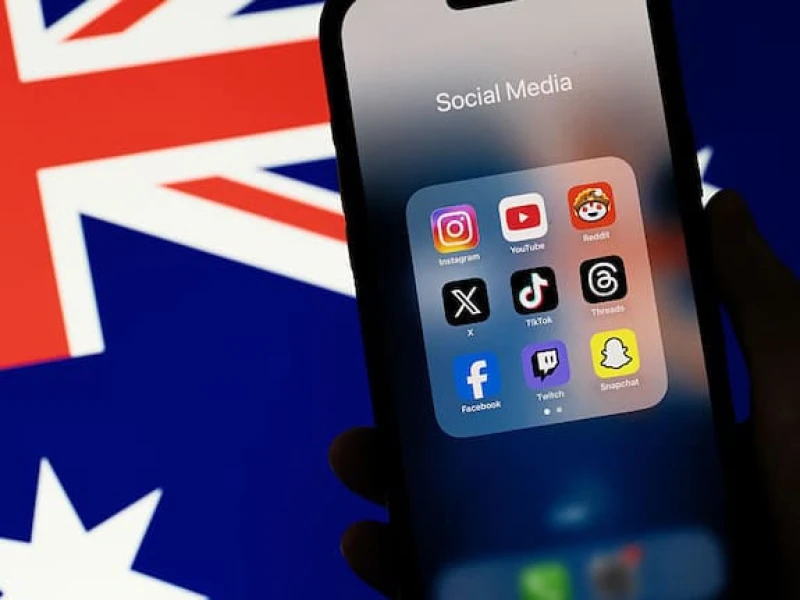
Australia has become the world’s first country to impose a nationwide ban on social media use for children under 16, ordering major platforms including TikTok, YouTube, Instagram and Facebook to block access from midnight Wednesday or face hefty fines.
Under the new law, ten of the largest platforms must restrict children’s access or risk penalties of up to A$49.5 million (US$33 million).
The decision has drawn criticism from technology companies and free speech groups, but has been widely welcomed by parents and child protection advocates amid rising concerns over the impact of social media on young users’ wellbeing.
In a video message to be shown in schools, Prime Minister Anthony Albanese said the ban aims to support children and ease the pressure created by constant algorithm-driven content.
“Make the most of the school holidays coming up. Rather than spending it scrolling on your phone, start a new sport, learn a new instrument, or read that book that has been sitting there for some time on your shelf,” Albanese said. “And importantly, spend quality time with your friends and your family, face to face.”
The move ends months of speculation about whether a government could practically block minors from platforms seen as integral to modern life. It also launches what experts describe as a global test case for policymakers frustrated by what they see as big tech’s slow response to online harms.
Tama Leaver, professor of internet studies at Curtin University, said Australia’s step will be closely studied worldwide. “While Australia is the first to adopt such restrictions, it is unlikely to be the last,” he said. “The social media ban … is very much the canary in the coal mine.”
Governments from Denmark to Malaysia, as well as several U.S. states, have signaled interest in similar policies—four years after leaked Meta documents suggested the company was aware its products contributed to teen body image issues. Meta says it already offers tools to protect young users.
The Australian government said the list of banned platforms would evolve as new apps emerge and children shift to alternatives.
 Prev Post :