
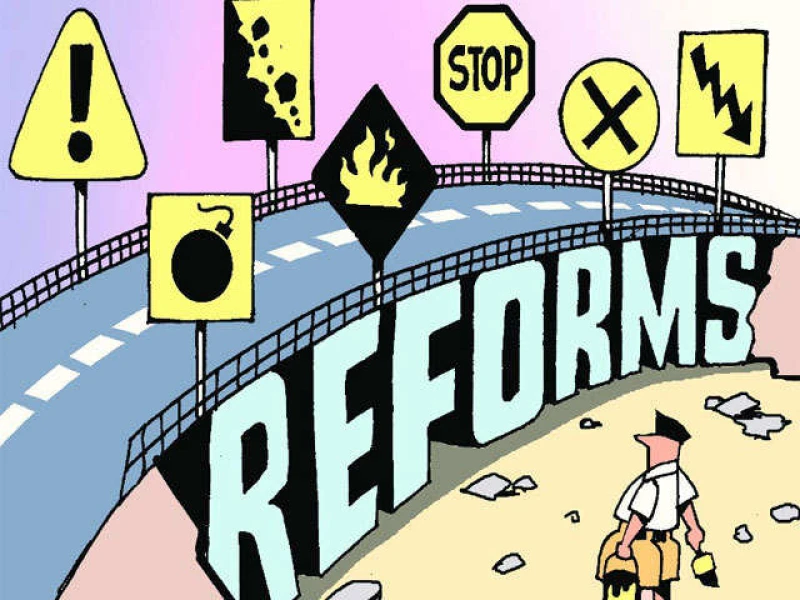
A comprehensive reform book documenting major legal, institutional and governance initiatives undertaken by the Interim Government has been published, outlining what it describes as a decisive shift away from authoritarian rule and systemic collapse towards democratic reconstruction.
The book traces the origins of the reform process to the July Uprising of 2024, when mass protests led largely by young people forced an end to nearly 16 years of authoritarian-style governance under the previous regime. Following the uprising, an Interim Government headed by Nobel laureate Professor Muhammad Yunus assumed office amid what it termed a deep economic, institutional and democratic crisis.
According to the publication, years of corruption and political misrule had severely weakened state institutions, drained public resources, crippled the banking sector with massive non-performing loans, and compromised the independence of regulatory bodies, law enforcement agencies and the judiciary. Media freedom and civic space had also sharply declined, while elections were held without meaningful voter participation.
In response, the Interim Government formed multiple Reform Commissions comprising sectoral experts to recommend structural changes. Based on those recommendations, and through its own initiatives, the government implemented reforms deemed feasible within its limited tenure.
The book states that over the past 18 months, the Interim Government has enacted around 130 laws—both new and amended—and taken more than 600 executive decisions. Of these, approximately 84 percent have already been implemented, reflecting what the government describes as substantive, rather than cosmetic, reform.
Significant progress has been reported in economic management and foreign relations. New trade agreements have diversified export markets, including an Economic Partnership Agreement with Japan that grants duty-free access to about 7,400 Bangladeshi products. Cooperation with China has resulted in extended loan maturities, healthcare infrastructure support and improved flood forecasting, while negotiations with the United States reduced reciprocal tariffs from 37 percent to 20 percent. Diplomatic engagement with key partners, including India, has also been recalibrated, the book notes.
On accountability, the publication says hundreds of politicians and officials from the former regime now face anti-corruption cases, with billions of dollars in assets frozen or confiscated. Banking oversight has been strengthened, procurement transparency expanded across 42 ministries, and the Bangladesh Bureau of Statistics granted full autonomy to publish economic data.
Law enforcement reforms have led to the suspension of over 1,200 officers pending investigation, alongside the introduction of human rights–based training for tens of thousands of personnel. Special commissions have begun recording testimonies from victims of past abuses, while the Rapid Action Battalion has been restructured and renamed the Special Intervention Force.
Judicial reforms, the book claims, have restored independence by placing all courts under the Supreme Court’s administration and introducing merit-based appointments insulated from political influence. Media freedom has also been reinstated, with politically motivated cases against journalists withdrawn and previously banned outlets allowed to resume operations.
The publication further highlights an inclusive political dialogue process that culminated in the July Charter, following seven months of nationally televised consultations. The Charter proposes constitutional reforms aimed at strengthening fundamental rights, checks and balances and preventing a return to authoritarian rule, and is now awaiting approval through a referendum.
While acknowledging that the reform process remains incomplete, the book concludes that Bangladesh has taken irreversible steps toward democratic governance, guided by the popular mandate expressed during the mass movements of July and August 2024.
 Prev Post :