The government plans to provide tabs to primary school teachers and, eventually, digital devices to students as part of a phased rollout of interactive digital systems in classrooms, State Minister for Primary and Mass Education Bobby Hajjaj said on Tuesday.
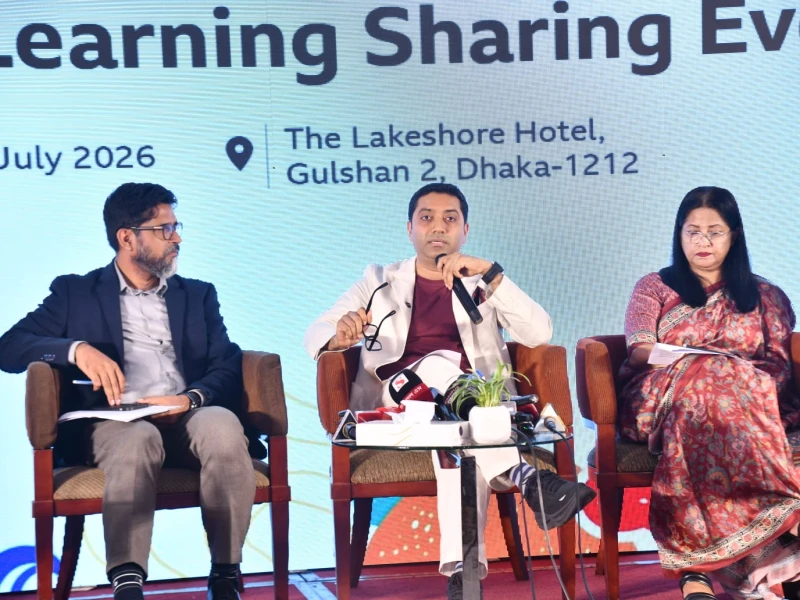
Speaking at a seminar on ‘Digital Gender Norms’ organised by BBC Media Action at a city hotel in Gulshan, the state minister said the goal was to raise the next generation not by keeping them away from digital technology out of fear, but by teaching safe, responsible and positive use of it.
He said the new education system would gradually bring teachers and students under technology-based learning, with tabs planned for teachers first and child-friendly digital devices for students to follow.
Bobby said children and adolescents should not be distanced from technology but should instead be prepared for the future through proper guidance on its use.
Referring to the internet shutdown during the July 2024 mass uprising, the state minister said attempts to silence public voices by cutting off internet access had failed, and that experience proved digital media was now an inseparable part of society, the state and civic life. “The priority now was not to reject technology but to build the capacity to use it correctly.”
Noting a clear mismatch between the pace of technological advancement and the prevailing social and cultural values, Bobby said bridging this gap required education institutions, families, society and the state to work together, with urgent need for training children and adolescents in safe digital behaviour, information verification and online ethics.
He expressed concern that fake photos, fake videos, character assassination and digital harassment on social media had reached an alarming level, with women, adolescent girls and women politicians the biggest victims. “Ensuring accountability on digital platforms and implementing effective laws and policies for the protection of children and women was a demand of the times.”
The government's aim, he said, was not to impose unreasonable restrictions on technology use but to strike a balance between freedom and security, adding that some effective regulation was necessary in the current social reality to safeguard children and women.
Bobby said the government was incorporating value-based education, digital safety, life skills, gender sensitivity and civic values as key components of the new primary curriculum, working in coordination with local and foreign experts and development partners including UNESCO.
He said ensuring the safe development of children was not the responsibility of parents alone but of society as a whole, adding that community engagement was being expanded in primary schools. “Guardian committees have already been formed to oversee the school meal programme, and similar efforts are underway to involve parents and local communities in other areas of the education system.”
Addressing representatives of international and national NGOs, the state minister said the ministry was now working under an open-door policy and that any initiative proven effective for students would be considered by the government for adoption and wider implementation.
On women's empowerment, Bobby said establishing women's leadership required more than slogans, calling for equal opportunity, equal rights, a safe environment and confidence-building from childhood, with educational institutions forming the foundation for this change.
Representatives of BBC Media Action, teachers, students and guardians from educational institutions in Khulna and Savar, along with officials from UN Women, Plan International, Jaago Foundation and other NGOs, attended the event.
 Prev Post :