
Bangladesh is set to adopt a new five-year action plan to strengthen its trade capacity, improve the investment climate and enhance competitiveness in international markets ahead of its graduation from the Least Developed Country (LDC) category, Commerce Secretary Ataur Rahman Khan said on Sunday.
The initiative will be carried out through implementation of the Country Programme Document (CPD), prepared for the third phase of the World Trade Organisation's (WTO) Enhanced Integrated Framework (EIF), the commerce secretary said.
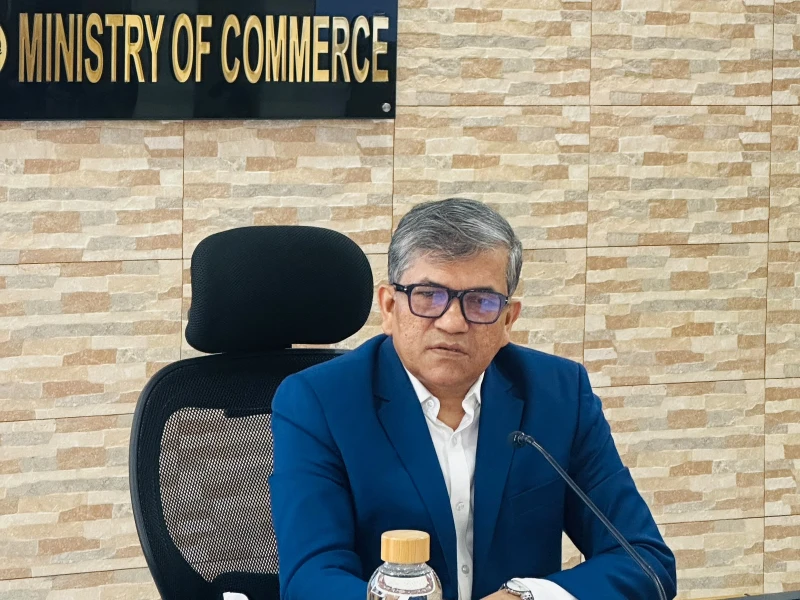
Speaking as chief guest at a validation workshop on the Country Programme Document, held at the conference room of the Ministry of Commerce, Ataur said Bangladesh's economy is passing through a critical juncture, with the country needing to prepare for LDC graduation while simultaneously addressing non-tariff barriers to exports, international compliance requirements and challenges in improving the investment climate.
He said recommendations made during earlier phases of the EIF have been incorporated into the Country Programme Document, which includes 12 activities aligned with Bangladesh's trade capacity development and reform needs.
The commerce secretary stressed that formulating policies or research reports alone would not suffice, and that successful implementation remains the key priority. "Alongside studies, there must be clear guidance on how reforms can be made effective at the implementation stage. The benefits of these reforms must reach ministries, directorates and related offices down to the grassroots level."
He added that emphasis is being placed on improving Bangladesh's business environment through trade facilitation, liberalisation, relevant laws and regulations, and coordinated action among various ministries.
Additional Secretary (WTO) at the Ministry of Commerce, Khadiza Naznin, said the WTO's Enhanced Integrated Framework supports LDCs in building trade capacity, with funding provided by several development partners, including the United Kingdom, the European Union and Sweden.
She said Bangladesh has already implemented two phases under the EIF — the first from 2009 to 2015 and the second from 2016 to 2024 — with the third phase now set to begin. Based on the Country Programme Document prepared for this phase, Bangladesh will receive funding support, with the five-year programme likely to start this year.
Former Additional Secretary and EIF consultant Md Hafizur Rahman said the Country Programme Document was prepared taking into account Bangladesh's existing policies, strategies and recommendations from earlier studies, particularly the Diagnostic Trade Integration Study (DTIS), export policy, industrial policy, trade policy, the Trade Facilitation Agreement and investment facilitation initiatives.
"Initially, around 52 projects were identified. Later, considering the possible support from development partners and implementation capacity, these were narrowed down to 12 priority activities," he said, adding that the activities give importance to boosting export capacity, trade facilitation, improving the investment climate, strengthening institutional capacity, training and research, as well as the use of artificial intelligence (AI).
Participants at the workshop expressed hope that implementation of the third phase of the EIF programme would play a crucial role in helping Bangladesh retain its competitiveness in international trade and attract fresh investment after its graduation from the LDC category.
 Prev Post :