
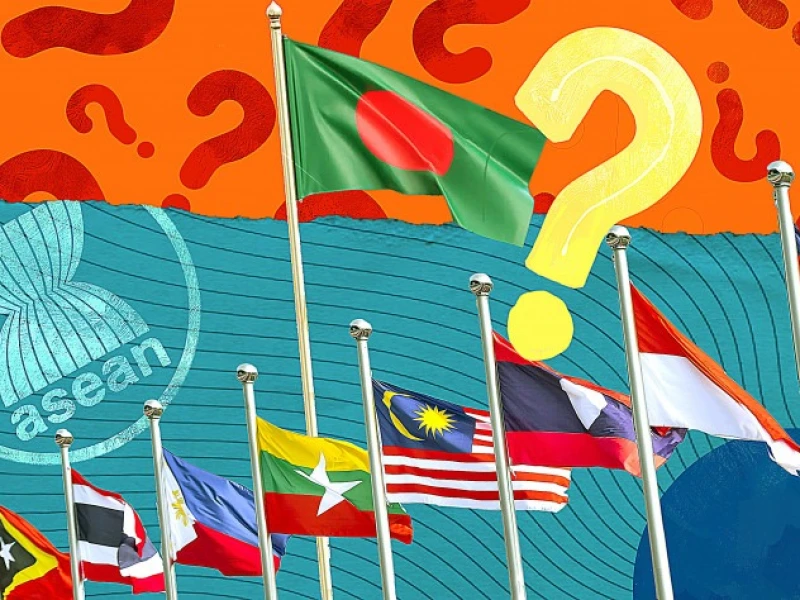
Dhaka, Bangladesh – Amid the ongoing US-Israel war on Iran and rising global energy uncertainties, the new Bangladesh Nationalist Party (BNP) government is ramping up efforts to diversify energy sources and deepen economic engagement with ASEAN countries.
State Minister for Power, Energy and Mineral Resources Anindya Islam Amit highlighted that Bangladesh, heavily dependent on Middle Eastern oil imports via the Strait of Hormuz, is exploring alternative suppliers in Southeast Asia. Brunei is expected to export 120,000 tonnes of oil to Bangladesh, while countries like Singapore, Malaysia, and Indonesia are being urged to increase petroleum exports to ease potential shortages.
“The war in the Middle East and the global energy crisis have pushed Bangladesh to accelerate negotiations with Brunei and other ASEAN partners,” Amit said. Earlier visits by then Prime Minister Sheikh Hasina to Brunei in 2019, and Sultan Haji Hassanal Bolkiah Mu'izzaddin Waddaulah’s visit to Dhaka in 2022, resulted in memoranda of understanding in the energy sector. However, little progress was made until the current crisis.
While Bangladesh’s total exports reached $48.28 billion in FY 2024-25, growth in trade with ASEAN countries remains modest at 1–2% of total exports, totaling less than $1 billion. Major exports include ready-made garments (RMG), semi-conductors, and select industrial products. Thailand, Indonesia, Brunei, Singapore, the Philippines, and Myanmar accounted for exports ranging from $13 million to $110 million in the same period, according to the Export Promotion Bureau (EPB).
Business leaders see potential in signing free trade agreements (FTAs) with ASEAN nations to boost exports. Anwar-ul Alam Chowdhury (Parvez), President of the Bangladesh Chamber of Industries (BCI), said, “Total exports to ASEAN countries can increase gradually if Bangladesh signs an FTA with the region.”
Thailand has expressed interest in bilateral FTA negotiations and is exploring direct shipping between Ranong port and Chittagong port to strengthen maritime connectivity. Thai Ambassador Thithiporn Chirasawadi conveyed Bangkok’s position during a recent meeting with Chief Adviser Professor Muhammad Yunus, emphasizing trade, investment, and people-to-people exchanges.
ASEAN diplomats, including representatives from Brunei, Indonesia, Myanmar, Philippines, Thailand, and Vietnam, recently met with ICC Bangladesh President Mahbubur Rahman, urging the reduction of trade gaps and promoting Bangladesh’s inclusion in ASEAN. Nguyen Manh Cuong, Vietnamese Ambassador to Bangladesh, said ASEAN recognizes Bangladesh’s export potential and called for enhanced product diversification, direct air connectivity, and coastal shipping routes.
Investments in renewable energy, tourism, and skilled manpower development were also discussed. The Indonesian representative expressed interest in Bangladesh’s solar power sector, signaling the region’s growing economic cooperation potential.
As Bangladesh navigates energy security challenges and seeks to expand its export base beyond traditional markets like the US, EU, UK, Canada, Japan, and Australia, stronger ASEAN engagement is emerging as a critical strategy for both trade and energy resilience.
 Prev Post :