
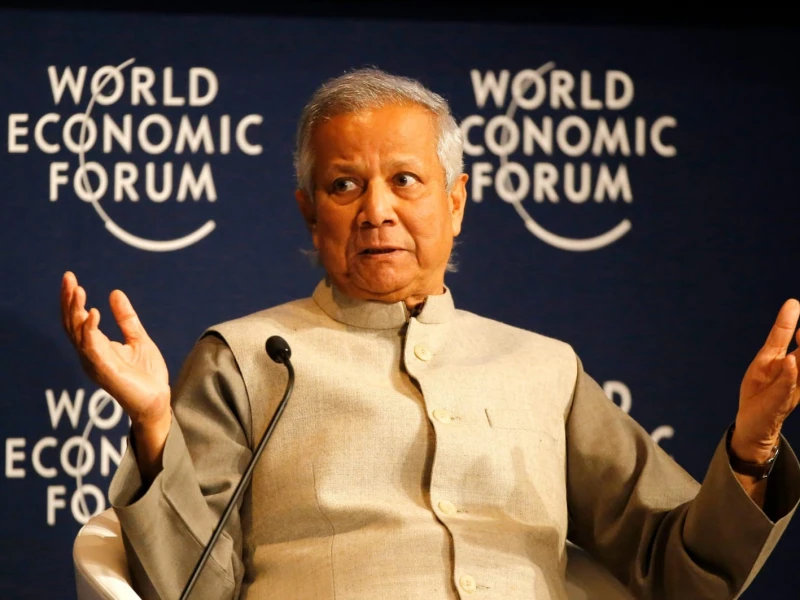
Bangladesh is poised to institutionalize Nobel laureate Professor Muhammad Yunus’ long-espoused social business philosophy at the heart of its financial sector by launching a specialised Microcredit Bank that aims to empower the poor and transform microfinance into a broader vehicle for inclusive economic growth.
The initiative comes as the interim government finalises the Microcredit Bank Ordinance 2025, a draft legal framework designed to establish a new type of financial institution grounded in social business principles rather than conventional profit-maximising banking. The proposed bank marks a landmark shift in how credit is delivered to millions of low-income households and micro-entrepreneurs across the country.
At its core, the planned Microcredit Bank seeks to redefine how financial services are structured and delivered to the poor, placing moral and developmental goals on an equal footing with financial sustainability. The bank’s model is built on the premise that finance should be a tool for social change — a conviction that has underpinned Yunus’ pioneering work in microfinance since the founding of Grameen Bank in the 1980s.
‘Banking with a Social Conscience’
According to analysts and proponents of the ordinance, the Microcredit Bank is not merely another financial institution — it represents a philosophical reboot of Bangladesh’s financial inclusion agenda. The plan envisions a bank where the poor are not just borrowers but active participants in ownership, governance, and economic decision-making.
Under the draft ordinance, the bank would be legally framed as a social business entity in which investors — including micro-borrowers themselves — recover no more than their original capital. Any surplus revenue would be reinvested to support expansion of services, reduce borrowing costs, and strengthen outreach to underserved communities.
Experts say this design is intended to avoid the pitfalls of profit‐driven banking that often marginalises the poor, instead creating a system where finance becomes accountable not only to shareholders but also to the societal impact it delivers.
Borrowers as Owners, Entrepreneurs at the Centre
One of the most innovative features of the new model is its democratic ownership structure. Under the ordinance, a majority share — typically up to 60 per cent — in the Microcredit Bank would be owned by the borrowers themselves. This arrangement, inspired by the Grameen Bank model, is aimed at aligning the institution’s mission with the interests of its clients.
“By giving borrowers a stake in the institution, we are shifting the power dynamic in finance,” said a senior official involved in drafting the legislation. “This is not charity, but a reimagined system where the poor become entrepreneurs and owners of capital.”
The remainder of the bank’s capital would be held by socially responsible investors or NGOs that agree to the social business ethos — namely, to limit their returns to the recovery of investment. This model is designed to encourage patient capital that supports long-term impact rather than short-term profit.
Integrated Financial Services for Inclusion
Beyond loans, the Microcredit Bank’s envisioned scope of services is wide, encompassing savings accounts, remittances, insurance offerings, and potentially investment products tailored to micro-entrepreneurs, small farmers, artisans, and informal workers.
Supporters of the plan say that integrating microcredit with a full suite of financial services will transform the sector by enhancing resilience, encouraging savings, and mobilising domestic capital for entrepreneurial growth.
“Microfinance has proved that the poor are creditworthy,” said a development economist familiar with the draft ordinance. “This bank will take that principle further by creating pathways for borrowers to evolve into small and medium enterprise owners. It could convert subsistence activity into sustainable enterprise.”
Legal and Regulatory Framework
The Microcredit Bank Ordinance 2025 also includes safeguards to ensure that the new institution remains true to its social mission. By codifying social business principles into law, regulators aim to prevent the drift toward commercialisation that critics argue has diluted the impact of microfinance in some contexts.
Under the draft, the bank would be subject to a clear regulatory framework, with responsibilities delineated between the Bangladesh Bank and the Microcredit Regulatory Authority (MRA). This clarity is intended to avoid regulatory overlap and ensure robust oversight without compromising the flexibility required for innovation in microfinance.
Regulators are also proposing capital requirements and governance criteria designed to protect the interests of all stakeholders while encouraging broad participation. These include democratic governance structures and transparent reporting mechanisms.
Support and Skepticism from the Sector
While many development advocates have welcomed the plan, reactions within the microfinance and banking sectors are mixed. Proponents argue that the Microcredit Bank could dramatically expand financial inclusion for the nearly half of adult Bangladeshis who remain outside the formal banking system.
Critics, however, cautioned that blending social goals with banking functions could introduce governance challenges. Concern exists that existing microfinance institutions may struggle to meet capital requirements or manage the transition to a bank structure without sacrificing mission focus.
Some analysts have also questioned whether the social business model can attract sufficient capital while maintaining strict limits on investor returns, at a time when domestic and international investors increasingly demand higher yields.
Legacy and Global Significance
For Professor Yunus, whose vision of social business has inspired initiatives globally, the proposed Microcredit Bank represents both an affirmation and evolution of his life’s work. Since pioneering microcredit more than four decades ago, Yunus has argued that poverty can be alleviated not only through charity or state intervention but through market mechanisms that uplift the poor as entrepreneurs.
Observers say that if successfully implemented, the bank could serve as a new model for inclusive finance in developing economies, showcasing how ethical finance can coexist with institutional sustainability.
“This is not just about Bangladesh,” said a South Asia finance expert. “It’s about redefining the role of finance in development — making it a tool for opportunity rather than exclusion.”
Next Steps and Outlook
With the ordinance now in its advanced drafting stage, attention is turning to parliamentary approval and the establishment of a regulatory infrastructure. Government officials have signalled that they will seek broad stakeholder consultation, including with existing microfinance institutions, civil society, and financial experts, before the Microcredit Bank becomes operational.
Whether the new institution can balance its social ambitions with financial viability remains a subject of national debate, but many see the move as a bold attempt to embed conscience into the country’s financial architecture — reflecting Bangladesh’s aspiration to lead the world in inclusive, people-centred economic innovation.
 Prev Post :
