
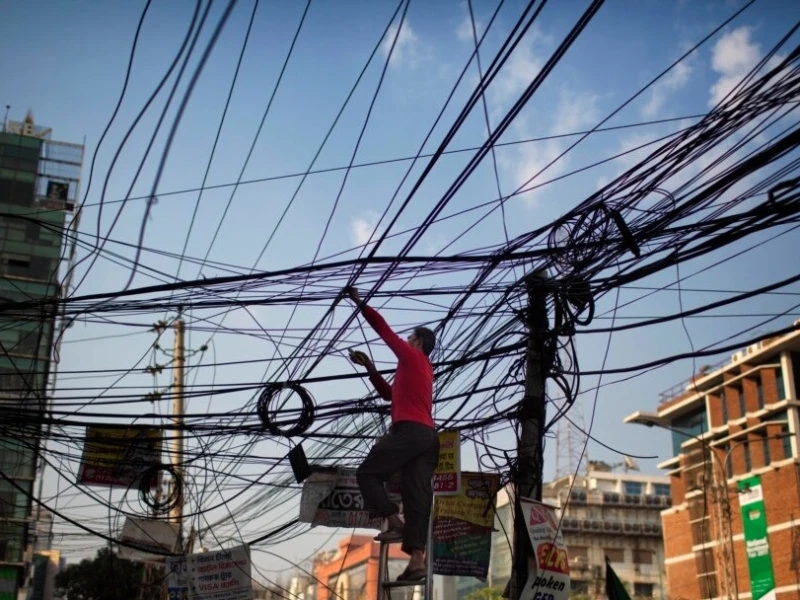
The Consumers Association of Bangladesh (CAB) has urged the government to eliminate the disparity in electricity supply between urban and rural areas, alleging that rural consumers continue to suffer prolonged outages despite official claims of adequate power generation.
In a statement issued on Tuesday, CAB Vice President SM Nazer Hossain said rural consumers should not be burdened with higher electricity tariffs while many areas still face frequent and extended load-shedding.
His remarks came amid ongoing discussions over a possible electricity tariff hike following a recent public hearing organised by the Bangladesh Energy Regulatory Commission (BERC).
Nazer alleged that distribution companies have proposed tariff increases to offset their losses by passing the burden onto consumers, particularly small and marginal users.
He questioned the rationale behind such proposals when many rural consumers do not receive uninterrupted electricity service.
Drawing on field observations made before and during Eid-ul-Azha in several upazilas of Cox’s Bazar district, including Chakaria, Pekua, Moheshkhali and Matamuhuri, he claimed that electricity supply in rural areas remains highly unreliable, with power often available for only short periods before prolonged outages resume.
He also criticised what he termed misleading claims regarding the country's power situation. While officials have stated that there is sufficient electricity generation capacity and no need for load-shedding, Nazer said consumers in many rural areas continue to experience severe disruptions.
According to the CAB leader, even Moheshkhali, which hosts the Matarbari power project supplying electricity to the national grid, faces lengthy power outages on a regular basis.
He said reports published in various media outlets during the Eid holidays also highlighted widespread consumer suffering due to prolonged power cuts in different districts and upazilas, although electricity supply remained relatively stable in many cities and divisional headquarters. “The contrast between urban and rural electricity services reflects a longstanding inequality that has yet to be addressed.”.
Nazer further pointed to structural weaknesses in the rural power distribution system, noting that electricity supply in many areas under the Rural Electrification Board (REB) is disrupted even during moderate rainfall or storms.
Despite achieving near-universal electrification, he said, the necessary infrastructure upgrades to ensure reliable and quality electricity service in rural areas have not been completed. As a result, power outages frequently occur during adverse weather and, in some cases, restoration takes several days.
He said REB is responsible for supplying around 58 percent of the country’s electricity through 80 rural electricity cooperatives across 462 upazilas, serving about 36 million consumers through a distribution network spanning approximately 537,000 kilometres.
However, he alleged that inadequate infrastructure, manpower shortages, policy weaknesses and poor-quality equipment have prevented rural consumers from fully benefiting from nationwide electrification efforts.
The CAB leader called for urgent reforms in the power distribution system and urged the authorities to ensure equitable and reliable electricity services for consumers across both urban and rural Bangladesh.
 Prev Post :