
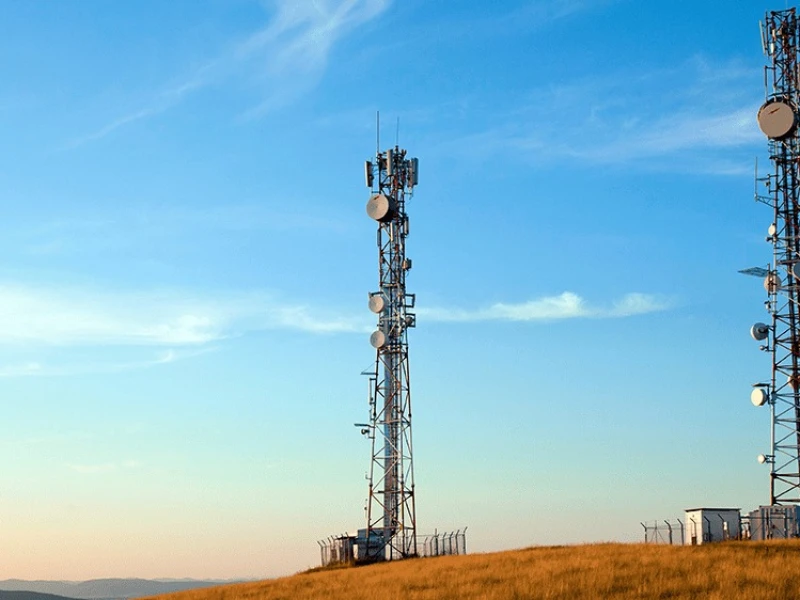
The Bangladesh Mobile Phone Consumers Association (BMPCA) on Tuesday called for sweeping reforms to the country's mobile tower infrastructure, warning that the recurring collapse of towers during even minor natural disasters reflects deep-seated failures in policy, construction standards and regulatory oversight failures that collectively imperil emergency services, economic activity and public safety.
In a press statement, BMPCA President Mohiuddin Ahmed said telecommunications towers must be legally designated as critical national infrastructure rather than treated purely as commercial assets, urging the government and Bangladesh Telecommunication Regulatory Commission (BTRC) to enforce mandatory structural safety audits and overhaul the regulatory framework governing tower companies. "The breakdown of communications networks means emergency services, the economy and public safety all come under threat simultaneously."
The association outlined a seven-point reform agenda. On structural resilience, it demanded that all tower designs comply with international standards for wind load and seismic tolerance, with urgent audits and reconstruction of ageing or structurally deficient towers. "Heavy-duty towers should be mandatorily deployed in coastal and high-risk zones."
On regulatory enforcement, BMPCA called on the BTRC to make periodic tower safety audits compulsory and to impose stringent service-level agreements on tower companies (TowerCos), with penalties including fines and licence suspension for non-compliance.
The association also pressed for guaranteed backup power, a minimum of 24 to 72 hours of battery and generator capacity at each tower site along with expanded use of solar energy, particularly in rural areas.
It recommended that the telecom sector be formally classified as a critical service with priority access to fuel supplies during crises.
On network redundancy, BMPCA advocated for greater infrastructure sharing among operators, fibre route redundancy and the activation of emergency roaming or network-sharing arrangements during disasters.
For disaster preparedness, the body recommended pre-positioning deployable Cell on Wheels (COW) units, formulating advance contingency plans for disaster-prone areas and conducting regular drills and simulation exercises.
It further called for mandatory soil testing prior to tower installation, routine inspections through local administration and a crackdown on substandard or unauthorised tower construction.
On consumer protection, BMPCA demanded compensation or bill adjustments for subscribers affected by service disruptions and the provision of free or priority communications during emergencies.
 Prev Post :