
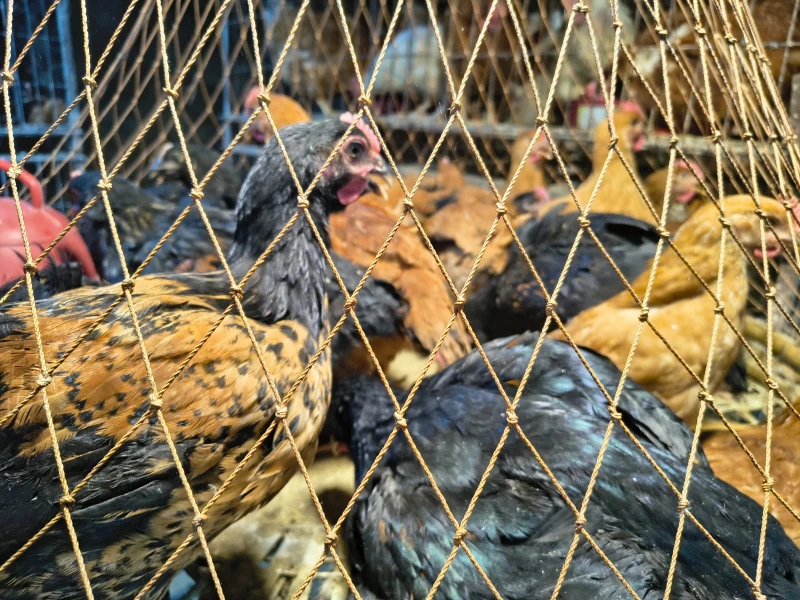
Chicken prices in Dhaka have surged by around 15–20 percent in the week leading up to Eid-ul-Fitr, putting pressure on consumers, particularly those from lower and lower-middle income groups.
A visit to major wholesale markets such as Karwan Bazar, Kaptan Bazar and Jatrabari shows that prices of different varieties of chicken have increased by Tk 60-120 per kg ahead of the festival.
At the wholesale level, Pakistani cock variety Sonali chicken is now selling at Tk 330–340 per kg, while hybrid Sonali is priced at Tk 300–320. According to the Department of Agricultural Marketing, these prices were below Tk 300 at the beginning of Ramadan.
In retail markets across Motijheel, Shantinagar, Malibagh, Rampura and Badda, consumers are paying even higher prices. Pakistani cock Sonali is being sold at Tk 380–400 per kg, while hybrid Sonali ranges between Tk 340–360.
During the first week of Ramadan, these varieties were priced between Tk 280 and Tk 320 per kg, indicating a 15–20 percent hike within a short span.
Broiler chicken, which accounts for a major share of consumer demand, has also seen a sharp increase. Prices have jumped from around Tk 160 per kg just days ago to Tk 220–240. Meanwhile, local (deshi) chicken is being sold at Tk 700–720 per kg, nearing the price of beef.
Traders attribute the sudden price hike to supply disruptions caused by fuel constraints. Hafiz Uddin, a wholesaler at Kaptan Bazar, said trucks carrying chickens from outside Dhaka are taking longer to reach due to fuel shortages, leading to increased costs.
Retailers, however, allege that wholesalers have deliberately reduced supply ahead of Eid, forcing them to sell fewer chickens at higher prices.
The price surge has left consumers frustrated. “How does chicken priced at Tk 280 suddenly become Tk 380? Broiler prices have also jumped from Tk 160 to Tk 230 per kg,” said Sumaiya Akter, a buyer at Rampura market.
The Consumers Association of Bangladesh (CAB) has accused traders of exploiting the situation by using fuel rationing as an excuse to raise prices.
CAB President AHM Shafiquzzaman said the government must strengthen market monitoring to keep prices within consumers’ reach. “Bangladesh is not facing a severe fuel crisis. Traders are using fuel rationing as a pretext to increase prices. Despite the unjustified hike, effective market monitoring is not being ensured.”
Expressing concern over the volatile meat market, he added that while marginal farmers are not making profits, consumers are paying more, indicating the growing influence of middlemen in the supply chain.
CAB urged the government to take effective measures to bring discipline to the market ahead of Eid.
 Prev Post :